Billionaires in space while the planet burns: what else could their rocket money have funded?
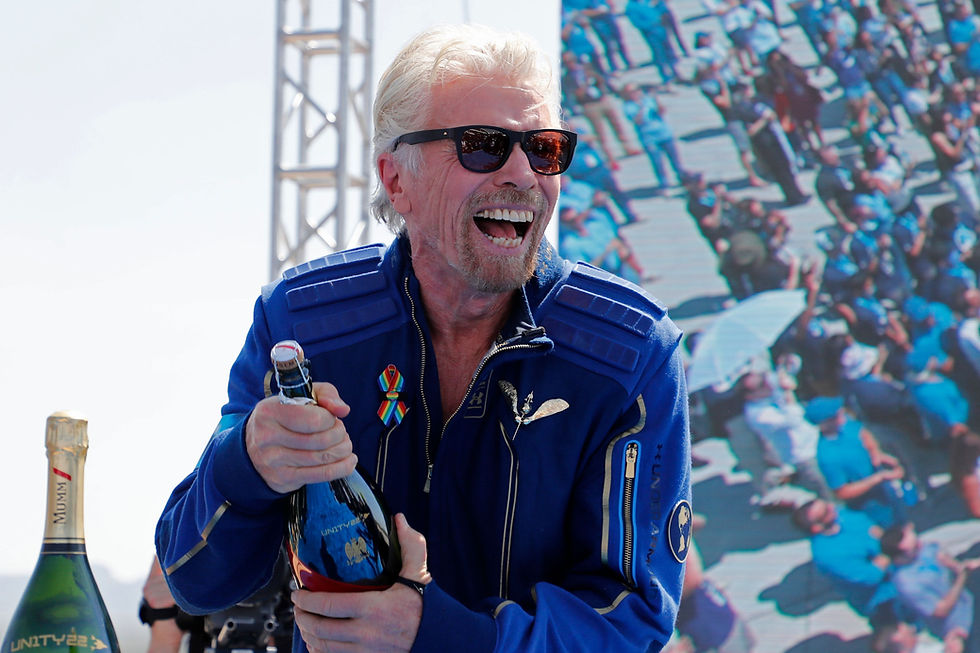
On 11 July 2021, British billionaire Richard Branson flew to the edge of space. Nine days later, Amazon founder Jeff Bezos followed. According to Oxfam, during the 11 minutes Bezos was in space, 121 people died of hunger.
The original space race of the 1960s was a geopolitical rivalry between the United States and the Soviet Union.
Today, the competition looks very different.
Instead of superpowers, three tech billionaires are leading the race: Jeff Bezos, Richard Branson and Elon Musk.
Together their personal fortunes amounted to roughly $370 billion in 2021—a figure that has since climbed beyond $500 billion by 2025.
To put that wealth into perspective: if the three men chose to do so, they could collectively pay off Turkey’s entire external debt and still have billions left over.
The cost of a few minutes in space
Space tourism is no longer science fiction, but it is still staggeringly expensive.
Elon Musk, whose SpaceX company is developing rockets for both satellite launches and future Mars missions, estimated in 2019 that a single launch could cost around $2 million in operational expenses.
Virgin Galactic, Richard Branson’s space tourism venture, priced tickets at $250,000 per passenger. When reservations opened, about 600 people signed up, paying deposits that totaled around $80 million.
Branson’s company reportedly spends around $1 billion a year developing its spacecraft.
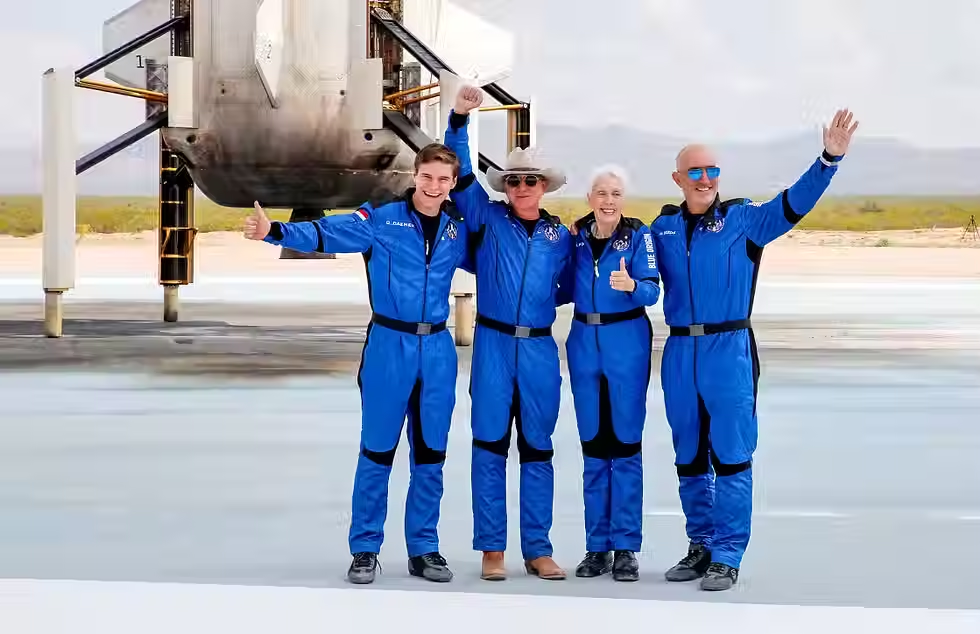
Jeff Bezos’ flight aboard a Blue Origin rocket on 20 July 2021 lasted about 11 minutes.
During that same period, estimates suggest Bezos’ personal fortune increased by roughly $1.57 million. According to the anti-poverty organization Oxfam, during the 11 minutes Bezos spent in space, 121 people died from hunger around the world.
For critics, the contrast between astronomical wealth and global hardship has become impossible to ignore.
“Class warfare while the planet burns”
Space travel is widely regarded as a historic milestone—the first step toward both space tourism and, eventually, reaching Mars. But as disasters continue to unfold on Earth, these dizzying sums have drawn intense criticism.
Warren Gunnels, an adviser to U.S. Senator Bernie Sanders, captured the anger in a widely shared tweet in July 2021:
“Class warfare is Jeff Bezos, Elon Musk and Richard Branson becoming $250 billion richer during the pandemic, paying a lower tax rate than a nurse and racing to outer space while the planet burns and millions go without healthcare, housing and food. Tax the rich.”
What else could $5.5 billion do?
The advocacy group Global Citizen estimated that Bezos spent roughly $5.5 billion on his space venture.
It also calculated what the same amount of money could have funded on Earth.
1. Prevent mass starvation
According to the World Food Programme (WFP), the number of people facing acute hunger surged during the COVID-19 pandemic to 270 million.
More than 600,000 people in Yemen, South Sudan, Madagascar and Ethiopia were already experiencing famine-like conditions.
Former WFP executive director David Beasley said that $6 billion could save 41 million people from starvation.
Global Citizen estimates Bezos’ spending alone could have saved 37.5 million lives.
2. Vaccinate billions
The global vaccine initiative COVAX, led by the World Health Organization, aimed to deliver vaccines to low-income countries during the pandemic.
Its goal of vaccinating 2 billion people in 2021 required about $2.6 billion—less than half the estimated cost of Bezos’ space program.
3. Deliver humanitarian aid
The same funds could have provided large-scale humanitarian support to crisis-stricken regions such as Nigeria, the Democratic Republic of Congo, Afghanistan, Venezuela, Yemen and the Horn of Africa.
4. Support rural farmers
The International Fund for Agricultural Development (IFAD) faces a funding gap of around $350 million to support small farmers, climate adaptation and rural livelihoods. Bezos reportedly earned that amount in about 30 seconds during his flight.
5. Fund global education
The international initiative Education Cannot Wait seeks nearly $4 billion to provide schooling for 13.6 million children displaced by war and disasters.
6. Help fight climate change
Space travel itself also carries environmental costs.
Eloise Marais, an atmospheric chemist at University College London, says rocket launches can emit four to ten times more nitrogen oxides than the UK’s largest thermal power station.
A single space tourism flight can produce up to 100 times more carbon emissions per passenger than an intercontinental commercial flight.
Meanwhile, the United Nations estimates that helping developing countries transition to low-carbon economies could cost between $140 billion and $300 billion annually by 2030.
7. Plant billions of trees
Environmental organization The Nature Conservancy estimates that planting a tree costs between $1 and $3.
That means Bezos’ $5.5 billion could have funded the planting of around 5.5 billion trees.
“Stratospheric inequality”
Ahead of Bezos’ flight, Oxfam released a statement titled: “Billionaires blast into space as billions suffer on planet Earth.”
The organization noted that U.S. billionaires collectively grew $1.8 trillion richer during the pandemic.
The statement said, “Bezos pays next to no US income tax but can spend $7.5 billion on his own aerospace adventure”, adding, “Bezos' fortune has almost doubled during the COVID-19 pandemic. He could afford to pay for everyone on Earth to be vaccinated against COVID-19 and still be richer than he was when the pandemic began”.
The group argues that even a 3% wealth tax on Bezos’ fortune could generate $6 billion annually.
A temporary pandemic profits tax on Amazon, it added, could raise $11 billion—enough to vaccinate nearly 600 million people worldwide.
“We’ve now reached stratospheric inequality,” the organization said.
“More than 4000 workers depend on food stamps”
Criticism has also focused on Amazon’s workforce.
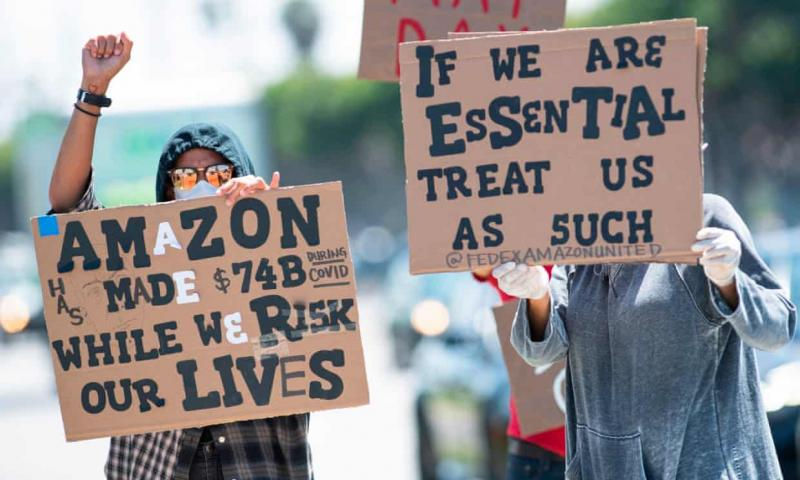
The company hired 500,000 additional workers in 2020, bringing its global workforce to about 1.3 million employees.
Yet according to the U.S. Government Accountability Office, more than 4,000 Amazon workers across nine U.S. states rely on food assistance programs.
Responding to Bezos’ space trip, Senator Bernie Sanders wrote on Twitter:
“Am I supposed to be impressed that a billionaire went to space while he’s paid zero in federal income taxes some years and the workers at his company struggle to afford their medical bills, rent, and food for their kids? Nope.”
What the billionaires say
Bezos himself acknowledged the controversy.
During a post-flight press conference, he said “I want to thank every Amazon employee and every Amazon customer, because you guys paid for all of this.”
The remark drew laughter—but also renewed criticism online.
Later, Bezos said critics were “largely right”, arguing that humanity should pursue both space exploration and solutions to problems on Earth.
Richard Branson, who has repeatedly stated that space flight was a childhood dream, also acknowledged the debate, saying he believed wealthy individuals should devote 90% or more of their fortunes to addressing global challenges, while still investing in new industries such as space travel.
The bigger question
Space exploration has always been tied to human ambition—from the first moon landing to dreams of colonizing Mars.
But the billionaire space race raises a broader question.
In a world of burning forests, deepening inequality and persistent hunger, many people are asking whether humanity’s greatest frontier lies among the stars—or here on Earth.
(This article was first published in Independent Turkish on July 22, 2021)


Yorumlar