The hidden inflation at the supermarket: What is “shrinkflation”?
The rise of the price tags is the visible face of inflation. But there is another, quieter form of price increase happening at the same time: Packages are getting smaller while prices stay the same, or even rise.

Where there is inflation, the products you buy from the market don't just get more expensive. Some also shrink without you even realizing it... And you head to the checkout with a brand new type of inflation in your shopping cart: Shrinkflation.
The term, a combination of the words “shrink” and “inflation,” describes the practice of reducing the size, quantity or sometimes the quality of a product while keeping the price unchanged. In some cases, the price increases as well.
Consumer advocate Edgar Dworsky, who has tracked shrinkflation for more than three decades and once served as deputy attorney general of Massachusetts, describes it bluntly as a “stealth price increase.”
“Consumers have price awareness, but not weight awareness,” Dworsky said in an interview with NPR in July 2021. “If the orange juice they always buy rises from $2.99 to $3.19, they’ll notice. But if the bottle shrinks from 1.8 kilograms to 1.6 kilograms, they probably won’t.”
A concept with a long history
Although the term “shrinkflation” is relatively recent, the practice itself is far older.
One of the earliest public critics of the tactic was the American satirist Art Buchwald, who died in 2007. In a 1969 column for The Washington Post, Buchwald wrote about what he called “packaged inflation.”

Companies, he said, had discovered a clever new strategy: shrink the product and enlarge the packaging.
His observation came at the start of a turbulent decade for the US economy. Inflation surged during the 1970s, driven partly by government spending on the Vietnam War and expansionary monetary policies.
By 1980, US inflation had climbed to nearly 14 percent, up from 5.5 percent in 1970. Manufacturers increasingly relied on subtle ways to mask price increases.
Writing in 2021, Bloomberg columnist Stephen Mihm recalled a telling example from the retail chain Woolworth, once a giant of American retail.
In the summer of 1974, the company advertised a discounted pencil set for 99 cents, the same price it had charged the year before. But The New York Times later reported that the package now contained 24 pencils instead of 30.
Another example came from the candy industry.
During the high-inflation years of the 1970s, rising sugar prices put pressure on manufacturers of gumballs sold through coin-operated vending machines. Because the machines were calibrated for a fixed size and price, producers couldn’t easily shrink the gum or raise the price.
Their solution was simple: hollow out the center.
Children, as Mihm put it, ended up chewing more air than sugar.
How companies shrink products?
According to Aziz Koçal, president of Turkey’s Consumer Protection Association (TÜKODER) and the Consumer Associations Confederation (TÜDEF), there are several ways companies implement shrinkflation.

The most common method is straightforward: reduce the weight or quantity while keeping the price the same.
A product that once weighed one kilogram might quietly drop to 900 grams, with the new weight written on the package. But many consumers do not notice the change, especially if the packaging remains the same size.
“This creates the impression that there has been no price increase,” Koçal said.
Another, more controversial practice involves selling a product labeled as one weight — for example 1 kilogram — while the actual contents weigh less.
“That is outright fraud,” Koçal said. “If you sell 900 grams as one kilogram and charge the full price, that’s deceiving the consumer.”
Why companies do it?
Manufacturers often defend shrinkflation as a response to rising costs.
In periods of inflation, companies face higher expenses for raw materials, production and logistics. Shrinking products allows them to maintain profit margins without visibly raising prices.
“Manufacturers are under pressure during inflationary periods,” Dworsky told NBC affiliate KSL in 2022. “They can raise prices, reduce product size — or do both.”

In many countries, reducing quantity while clearly labeling the new weight remains legally permissible.
But critics argue that the practice can go beyond cost management.
According to Annie Gasparro, a food industry reporter at The Wall Street Journal, some companies shrink products simply to increase profits.
And shrinkflation does not occur only in packaged food.
Restaurants may serve smaller portions at the same price. Rolls of toilet paper may contain fewer sheets. Hotels may stop offering daily towel changes or free Wi-Fi while maintaining the same nightly rate.
Even cars can be affected — with new models offering fewer features while costing the same.
“Everyone tries to avoid raising prices,” said Steve Dresser, an analyst at retail research firm Grocery Insight. “But with rising costs for ingredients, energy and labor, it’s increasingly difficult.”
Are companies that shrink their products publicly identified?
In Turkey, there is no comprehensive public record showing which companies have reduced product sizes as part of shrinkflation practices.
The Ministry of Agriculture and Forestry periodically publishes lists of companies found to have engaged in food imitation or adulteration, but these disclosures are limited to food safety violations rather than reductions in product quantity.
Food engineer Mehtap Keskin Evcimen, director of the A&T Food Control Laboratory, explains that food fraud typically falls into two categories: imitation and adulteration.
Imitation refers to products that are presented as having qualities they do not actually possess — or that are marketed as if they were another product entirely.
Adulteration, on the other hand, occurs when manufacturers remove some or all of the valuable ingredients that give a product its main characteristics and replace them with lower-quality substitutes. The aim is usually to reduce production costs and increase profit margins.
The practice has existed for centuries. Some of the earliest known examples include adding water to milk, mixing bone powder into flour, or diluting wine with water and other flavorings — techniques recorded as far back as ancient Rome.
But the government lists published by the agriculture ministry focus only on food fraud. They do not track or publicly disclose companies that quietly reduce product sizes or quantities.
That means consumers may notice that a familiar product — such as paper towels or packaged foods — has become smaller or more expensive, without any official record identifying which brands have made the change.
Aziz Koçal, president of the Consumer Associations Confederation (TÜDEF), said the Ministry of Trade does not publish a list of brands involved in shrinkflation either.
He also points to a delay problem in the agriculture ministry’s disclosure system. After inspections are carried out, samples are sent to laboratories for testing, and the results can take months to finalize. By the time the public is informed, the products may have remained on shelves for a long period.
Which products are most affected?
Today, inflation caused by reduced product weight can be seen in almost every product, from nuts and instant soups to animal feed and detergents.
According to Mehtap Keskin Evcimen, these are the foods with the highest commercial value. These include milk and dairy products, meat and meat products, olive oil, honey, molasses, spices, and alcoholic beverages.
Aziz Koçal gives an example, saying, "For instance, you buy pre-packaged minced meat, ready-made meatballs, or sausages and salami in 200-250 gram packages. Inside, you find offal or meat without hooves."
From chocolate bars to chips
Shrinkflation has become widely visible across global consumer markets.
A 2022 Bloomberg report noted that companies ranging from Nestlé to snack giant Mondelez have reduced product sizes.
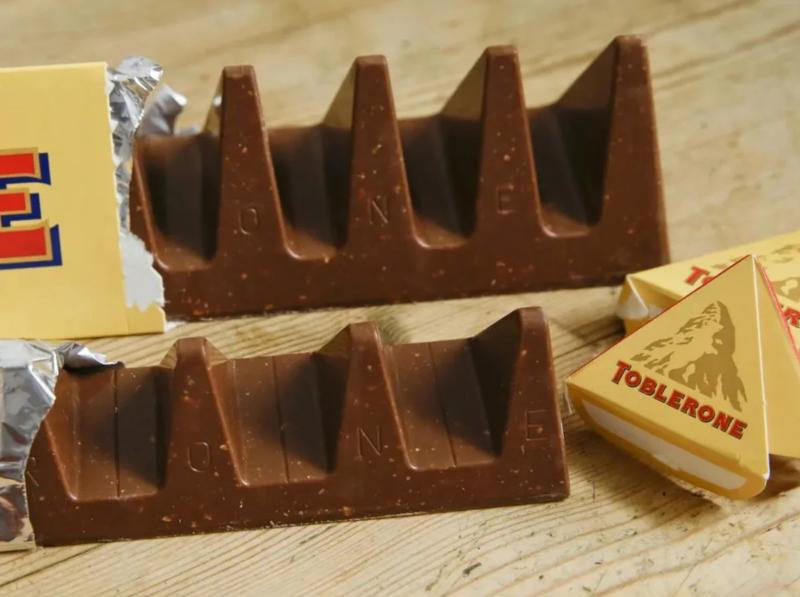
Mondelez — which owns brands including Milka, Oreo and Toblerone — faced criticism after reducing its Cadbury Dairy Milk chocolate bar from 200 grams to 180 grams. The company said it was the first size reduction in a decade and necessary to remain competitive.
In the United States, several food chains have also trimmed portions. Subway restaurants reportedly began using less meat in sandwiches, while Domino’s reduced the number of chicken wings in an order from ten to eight.
Snack brands have not been immune either.
Media reports highlighted how Doritos, produced by PepsiCo, appeared in smaller quantities inside familiar packaging.
Sometimes the packaging itself changes to mask the reduction.
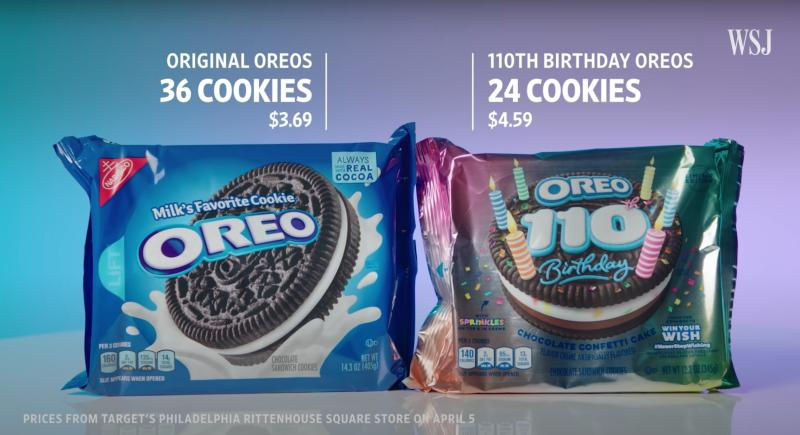
In 2022, a special “limited edition” package celebrating Oreo’s 110th anniversary contained 24 cookies instead of the usual 36, despite appearing the same size. The redesigned pack sold for $4.59, compared with $3.69 for the original.
Official data from the UK’s Office for National Statistics shows that more than 200 products shrank in size between September 2015 and June 2017 alone.
According to research by online retailer Britsuperstore, chocolate products generate the most complaints about shrinkflation, followed by cheese and milk.
How should it be monitored?
According to Aziz Koçal, commercial ethics have degenerated day by day in Turkey.
The misunderstanding of the concept of a "free market economy” is one the reasons.
"The perception that 'a free market economy means everyone sets the price they want' is wrong," said Koçal, addding "A free market economy is not an unregulated economy."
Stating that monetary fines are correct but not a deterrent, Aziz Koçal argues that an ethics law should be enacted for every profession.
"We still see advertisements on television selling honey for 100 lira (5 euro). It has nothing to do with honey; they are selling sugar syrup. The only legal regulation expected to prevent this today is a monetary fine, or a penalty for the relevant channel. However, these individuals earn many times that amount" he said.

What consumers can do
Consumer groups say shoppers can protect themselves by paying closer attention to unit prices and product weights, rather than relying on familiar packaging.
Koçal also urges consumers to know their rights.
If a product does not match the weight or features stated on its packaging, it is considered defective under consumer protection law. Customers can request a refund, a replacement product or a price reduction.
Another important rule applies at the checkout counter.
“If the price on the shelf and the price at the register are different, the shelf price is valid,” Koçal said.
Ultimately, he added, consumer awareness is one of the strongest tools available.
“Even if the difference is just one lira, people should demand their rights,” Koçal said. “When consumers speak up, unfair practices become harder to sustain.”
(This article was first published in Independent Turkish on June 4, 2022)


Yorumlar