Agriculture’s Controversial Child: Hemp — Where Does Production Stand in Turkey and the World?
Güncelleme tarihi: 26 Mar
Hemp production, which has existed in Anatolia for centuries, was given a new regulatory framework in 2016, legalizing cultivation in 19 provinces. So where do Turkey stand today? Has the sector reached the export levels once promised?

“If history were to write about humanity’s pursuit of pleasure as extensively as it does about wars, its thickest volume would likely be devoted to cannabis.”
With these words, academic Onur Gezer describes the long and complicated story of hemp in his book Cannabis and Cannabis Users in the Ottoman Empire (Osmanlılarda Esrar ve Esrarkeşler).
Derived from the hemp plant — known in Turkish as kenevir or kendir — cannabis has existed for thousands of years. Originating in Asia, the plant has appeared throughout history under many different names: beng in Persian, kaneh bosem in Hebrew, azalla in Sumerian and referred to in the Ottoman era as “fülfül,” “haşiş,” or “black pepper,”
Archaeological discoveries across Asia suggest hemp was already cultivated thousands of years ago. Seeds were consumed as food by early hunter-gatherers, while later civilizations in China crushed them to produce oil and used the plant medicinally to treat conditions ranging from malaria to rheumatism.
Excavations near the Pamir Mountains in Central Asia have even uncovered evidence that cannabis smoke was used in funeral rituals some 2,500 years ago.
Beyond ritual and medicine, hemp also played a crucial role in the development of global trade. According to historian Muhammed Fazıl Himmetoğlu, the durability of hemp fibers made long-distance maritime travel possible. Ropes and sailcloth made from hemp were used on the ships of Christopher Columbus when he crossed the Atlantic in the 15th century.
Hemp in the Ottoman world
During the Ottoman period, hemp was widely used in medicine, textiles and maritime industries.
The famous 17th-century traveler Evliya Çelebi even mentioned a guild of cannabis consumers known as Esnaf-ı bengciyan”, a guild of cannabis-consuming tradesmen. In his travelogue Seyahatname, he describes them as people who “eat beng and laugh and joke.”
But hemp’s significance extended well beyond the social sphere. The ropes and rigging made from hemp were essential for the Ottoman navy, while the fiber produced in northern regions such as Rize and Trabzon was used in clothing for both common citizens and members of the palace.
From Empire to Republic
The establishment of the Turkish Republic in 1923 marked a turning point in efforts to transform agricultural products into industrial commodities.
However, hemp cultivation struggled to achieve stability during the early decades of the 20th century. A combination of factors — including World War I, economic hardship, shrinking cultivation areas, the global rise of cotton and the loss of export markets — hindered the development of a consistent hemp industry.
Another obstacle was the lack of technological capacity needed to convert hemp into high value-added industrial products.
Despite these challenges, Turkey was once among the world’s notable hemp producers.
Turkey once ranked among the world’s hemp producers
Under the state-led economic policies of the 1930s, the government introduced five-year development plans aimed at expanding the production and processing of industrial crops such as cotton, sugar beet and hemp.
During both the late Ottoman and early Republican periods, provinces such as Aydın, Ordu, Samsun, Trabzon, İzmir and Kastamonu emerged as important hemp production centers.
According to research by Okan Ceylan, an associate professor at Ege University, the Soviet Union dominated global hemp production in the 1930s, accounting for about 42 percent of the world’s output. Italy followed with around 20 percent. Turkey ranked 10th globally, producing roughly 10,000 tons annually.
Official statistics show that in 1933 Turkey produced:
· 6,335 tons of hemp fiber
· 2,368 tons of hemp seeds
Exports were also significant. Nearly 700 tons of hemp fiber were shipped from Kastamonu to European cities including Marseille, Liverpool, Hamburg and Antwerp.
Hemp Cultivation in Turkey by years | |||
|---|---|---|---|
Field (hectare) | Fiber (ton) | Seed (ton) | |
1933 | 9753 | 6335 | 2368 |
1938 | 13022 | 9683 | 1785 |
1992 | 33700 | 4409 | 800 |
2001 | 7000 | 1000 | 160 |
2011 | 297 | 16 | 8 |
2016 | 70 | 7 | 1 |
2017 | 70 | 7 | 1 |
2018 | 114 | 7 | 3 |
2019 | 696 | 19 | 20 |
2020 | 4353 | 9 | 273 |
2021 | 641 | 21 | 20 |
2022 | 2328 | 31 | 159 |
State bank Sümerbank and industrial ambitions
Demand for hemp declined with the outbreak of the First World War in 1914, which also marked the beginning of the first restrictions in the United States. Following the Geneva Convention of February 19, 1925 — which placed cannabis cultivation under international control — Turkey adopted a similar law on June 12, 1933.
The law prohibited the production and trade of hashish derived from cannabis while allowing the cultivation of hemp for fiber, stalk and seed purposes under state authorization.
Just one month after this legislation was enacted, Sümerbank was established.
The institution was granted broad authority ranging from managing factories and providing credit to opening schools for training skilled workers and technicians. In many ways, it functioned as the central command of Turkey's early industrialization efforts.
Hemp was cultivated on the state farms established under Mustafa Kemal Atatürk, part of a broader strategy to modernize Turkish agriculture.
The five-year industrial plan
The First Five-Year Industrial Plan, launched in 1934, aimed to build factories across several sectors including textiles, mining, cellulose, ceramics and chemicals.
Nearly 50 percent of the plan’s 44 million-lira budget was allocated to textile industries such as cotton, wool and hemp. However, World War II was approaching. Costs eventually rose to nearly 100 million liras.
Despite this, by 1938, 19 of the 23 planned factories had begun construction, financed through a combination of domestic capital and foreign loans from the Soviet Union and the United Kingdom.
Among them was a hemp-processing facility in Taşköprü, Kastamonu — a region long associated with hemp cultivation.

Raw material shortages changed the plans
The Taşköprü Hemp Fiber Factory had the capacity to process 4,000 tons of hemp annually and was equipped with mechanized systems to separate fibers and soften them for industrial use.
But despite its modern equipment, the factory faced an unexpected challenge: a shortage of raw materials.
Farmers facing financial hardship continued to carry out retting and stripping processes using family labor rather than paying wages to outsiders.
Transportation difficulties between farms and the facility also played a role. Some farmers preferred to store their harvest in hopes of selling it later at higher prices, while others used the woody outer shell of the plant as fuel for heating.
Still, the factory did bring some economic benefits. Employment in the region increased, electricity infrastructure expanded in Taşköprü, and demand rose for hemp sacks used to transport grain to markets.
The Marshall Plan and a shift in agriculture
The trajectory of Turkish agriculture changed again after World War II.
The Marshall Plan, launched by the United States in 1948 to rebuild Europe, provided billions of dollars in aid to 16 countries.
Turkey joined the program the same year through the Economic Cooperation Agreement signed on July 4, 1948.
At the time, 82 percent of Turkey's population worked in agriculture.
The loans allowed farmers to purchase tractors and modern equipment, accelerating mechanization across the countryside. But the program also influenced what kinds of crops farmers produced.
One of the American experts sent to Turkey, Max Weston Thornburg, argued in a report following a three-month visit that the country should reduce state-led industrialization and avoid heavy industrial investments.

USA: Tractors should not be used in tobacco regions
Under the Marshall Plan, the United States supplied agricultural machinery — especially tractors — to countries rebuilding their economies. In Turkey, the new equipment was distributed mainly to provinces where wheat and cotton production dominated, including Adana, Aydın, İzmir, Ankara, Konya and Eskişehir.
Mechanization transformed the countryside. Agricultural land expanded by roughly 60 percent, and production surged in crops such as cotton, wheat, rice, potatoes and lentils.
But the program also influenced what farmers were expected to grow.
According to the article “How Did the Marshall Plan Contribute to the Development of Turkish Agriculture?” by Süleyman Karaman and Cemile Feyza Yavuz, the United States determined which crops tractors and other machinery would support. In tobacco-producing regions, tractors were not encouraged.
As a result, cotton cultivation expanded, often replacing tobacco. Crops that were already struggling — including hemp — were further pushed aside. During the Marshall Plan years, cotton production more than doubled in Turkey.
The closure of the Taşköprü hemp factory
These changes had direct consequences for the hemp industry.
The Taşköprü Hemp Industry facility in Kastamonu — built as part of the country’s early industrialization efforts — depended on a steady supply of raw hemp from farmers. But as agricultural priorities shifted, that supply dwindled.

In 1951, the factory was shut down after failing to secure enough raw materials and deliver the expected economic returns.
A report issued by the Turkish Grand National Assembly in 1968 revealed that the enterprise had accumulated losses exceeding 20.6 million Turkish liras.
For several decades, hemp produced in Turkey continued to be used in facilities belonging to SEKA, the state-owned Turkish Pulp and Paper Mills Company. But cultivation levels kept falling.
In 1928, hemp had been grown on more than 11,000 hectares. During the early years of World War II, the area rose to around 13,000 hectares.
By 2015, however, hemp cultivation had shrunk to just 10 hectares nationwide.
Privatization also played a role in the sector’s decline. The SEKA factory was included in Turkey's privatization program in 1998 and transferred to the Privatization Administration in 2004. For a time, the plant began importing hemp raw materials because they were cheaper abroad — a development that pushed domestic production to the brink. Eventually, the SEKA factory itself ceased operations.
A political push to revive hemp
A new chapter began in 2016.
On September 29, 2016, a regulation published in the Official Gazette allowed hemp cultivation in 19 provinces, including Kastamonu, Samsun, İzmir, Amasya, Tokat and Zonguldak.

At the time, President Recep Tayyip Erdoğan framed the policy as a revival of a neglected agricultural product.
“We eliminated hemp in our country,” Erdoğan said. “Enemies posing as friends took hemp production away from Turkey. Today we import hemp. The Ministry of Agriculture has begun work to revive domestic production.”
The announcement brought hemp back into the national policy agenda after decades of decline.
A sharp rise in cultivation — but limited productivity
Since the regulation took effect, the land devoted to hemp cultivation has increased sharply.
According to data from the Turkish Statistical Institute (TÜİK), the total cultivation area expanded roughly 70-fold within eight years.
However, productivity gains have remained modest.
In 1992, hemp was grown on 33,700 decares, yielding about 131 kilograms of fiber and 24 kilograms of seed per decare.
By 2016, cultivation had fallen dramatically, covering only 45 hectares for fiber and 25 hectares for seed, though yields per decare rose slightly to 156 kilograms of fiber and 40 kilograms of seed.
In 2022, total cultivation again declined, covering just over 2,300 decares. Production reached 159 tons of hemp seed and 31 tons of fiber.
While cultivation levels fluctuate, productivity has not changed dramatically. As a result, Turkey remains far from the global position it once held in hemp production.
Research and new seed varieties
Despite these challenges, several initiatives aim to rebuild the sector.
In 2017, the Black Sea Agricultural Research Institute — part of the Ministry of Agriculture and Forestry’s General Directorate of Agricultural Research and Policies (TAGEM) — launched a project to develop industrial hemp suitable for the region.
The program focused on adapting low-THC hemp varieties and producing domestic seeds.
Through selective breeding, researchers developed a new variety known as Vezir 55.

Further work at Ondokuz Mayıs University’s Hemp Research Institute in Samsun produced additional seed varieties called Narlı and Vezir.
Under a program to develop low-THC hemp genotypes, researchers reduced psychoactive compounds in certain varieties from 1–5 percent to as low as 0.2 percent.
In 2021, the Narlı and Vezir seeds were officially registered as Turkey's first domestically developed hemp varieties.
The global hemp market
Because of its association with narcotics, hemp cultivation declined worldwide from the 1990s onward. Over time, however, the plant regained attention for its industrial uses, including textiles, biodegradable plastics, construction materials and food products.
Global hemp cultivation covered about 63,000 hectares in 1990, but shrank to 26,000 hectares by 2017. During the same period, however, hemp seed production increased sharply, rising from 35,000 tons to 93,000 tons.

Today, the Asia-Pacific region leads industrial hemp production, with China, Japan and South Korea at the forefront.
According to a United Nations Conference on Trade and Development (UNCTAD) report published in 2022, the global hemp market is projected to reach $18.6 billion by 2027.
What is hemp?
One of the most common misconceptions about hemp cultivation is the belief that all hemp can be used to produce drugs.
In reality, the varieties used in legal agriculture — known as industrial hemp — contain extremely low levels of the psychoactive compound tetrahydrocannabinol, or THC. In most countries, the concentration of THC in industrial hemp must remain between 0.2 and 0.3 percent, a level far too low to produce psychoactive effects.
Producers emphasize that it is impossible to manufacture narcotic substances from these seeds.
Hemp, native to Central Asia, belongs to the Cannabinaceae family and is known scientifically as Cannabis sativa.
The plant has several subspecies. Two of the most widely known are Cannabis sativa vulgaris, traditionally cultivated for fiber production, and Cannabis sativa indica, often referred to as Indian hemp.
While the former is used in industry, the latter contains significantly higher concentrations of psychoactive substances. In some cases, THC levels can reach 20 percent, which is why indica varieties are banned in Turkey and many other countries.
Under suitable conditions, hemp can grow up to six meters tall and develops a strong, fibrous stem. The plant matures in roughly four months. Seeds planted in April or May are typically harvested in August or September, and hemp cultivation generally requires no agricultural pesticides.
Male and female plants
Hemp plants exist in both male and female forms, and the distinction between them plays a crucial role in cultivation.

Female plants produce flowers, while male plants tend to grow taller but have thinner stems. Female plants, however, usually provide higher fiber yields.
Pollination occurs when pollen from male plants fertilizes the female plants, leading to the formation of hemp seeds that may contain up to 35 percent oil.
Once pollination is complete, male plants begin to wither and often appear yellow among the still-green female plants. Fibers from male plants are commonly used in textile production.
Female plants, meanwhile, are the source of compounds used in medical cannabis research.
When fertilization does not occur — in simpler terms, if “the egg remains alone” — they produce higher concentrations of active chemical compounds associated with narcotic properties.
Why growing only female plants is illegal?
For this reason, growing only female hemp plants is illegal in many countries.
Burcu Filibeli, founder of Yelbis Phytochemistry Agriculture, says that farmers cultivating industrial hemp must plant male and female plants together.
“If female plants are not fertilized, white spots appear on the flowers. This indicates the formation of psychoactive substances,” she explains.
Authorities regularly inspect hemp fields. If inspectors discover that only female plants are being grown, the crop may be destroyed.
Filibeli also notes that once hemp seeds are harvested, the flowers and leaves must legally be destroyed, preventing their use for narcotic production.

The two compounds that define hemp
Two key chemical compounds determine hemp’s controversial reputation: THC and CBD.
THC, or tetrahydrocannabinol, is the plant’s primary psychoactive component and is responsible for the “high” associated with recreational cannabis use.
Through selective breeding, however, THC levels in industrial hemp have been reduced to extremely low levels — typically 0.2–0.3 percent of the plant’s dry weight.
Legal limits vary slightly between countries: 0.3 percent in Canada and 0.2 percent in the European Union.
The second compound, cannabidiol (CBD), is one of the most important cannabinoids found in hemp.
Cannabinoids are chemical compounds present in many plants, but hemp contains particularly significant levels of CBD. Although CBD and THC share the same chemical formula, their atomic structures differ. This difference means THC produces psychoactive effects while CBD does not.
Medical research suggests that compounds derived from hemp may help manage a range of conditions, including chemotherapy-related nausea, neurological disorders, inflammation, bowel diseases, migraines, depression, glaucoma and muscle spasticity.
A plant with hundreds of industrial uses
Beyond medicine, hemp is one of the most versatile plants used in modern industry.
Its fibers can be used to produce textiles, ropes, canvas, insulation materials, paper products, cosmetics and biodegradable construction materials. Hemp is also used in food products, animal feed, cooking oils and even cigarette papers or tea bags.
In some industrial applications, processed hemp fibers can become stronger than steel, increasing the durability of materials such as automobile components.
Environmental benefits are another reason for the renewed global interest in hemp. A single hectare of hemp fields can absorb between 22 and 44 tons of carbon dioxide each year, compared with roughly five tons for cotton.
Water consumption also differs dramatically. Producing one kilogram of cotton fiber requires about 10,000 liters of water, while hemp fiber requires only around 2,000 liters.
How hemp cultivation is regulated in Turkey?
The legal framework governing hemp production is defined in the “Regulation on Hemp Cultivation and Control,” published in the Official Gazette on September 29, 2016. The regulation allows hemp cultivation only in 19 designated provinces, while growing the plant elsewhere remains illegal.
Farmers wishing to cultivate hemp must first complete a series of administrative steps before planting even a single seed.
The first requirement is registration in the Farmer Registration System (ÇKS), Turkey's official agricultural database.
Once registered, farmers must apply to provincial or district agricultural directorates, specifying the purpose of cultivation — whether for fiber, seed or stem production — and providing detailed information about the land where the crop will be grown.
Applicants must also submit a clean criminal record, confirming they have not previously been convicted of illegal hemp cultivation or any offences related to narcotics production, trafficking, distribution or use.
Permits are typically granted for one production cycle when hemp is cultivated for industrial purposes such as fiber or seed production. Scientific research projects, however, may receive authorization for up to three years.
Once approval is granted, farmers receive certified seeds produced by the Hemp Research Institute at Ondokuz Mayıs University and distributed through the General Directorate of Agricultural Enterprises (TİGEM).
Fields are then placed under strict supervision. From planting to harvest, authorities inspect hemp fields at least once a month. Any crop grown without authorization is destroyed and referred to judicial authorities.
Security concerns and theft
Despite the regulatory framework, hemp producers say the most serious challenge is not bureaucracy but security.
According to Hakan Çakıcı, head of the Chamber of Agricultural Engineers in İzmir, hemp cultivation functions similarly to other regulated agricultural products in Turkey, such as tobacco, sugar beet and poppy, which are produced under licensing and contract systems.

Companies that want to process hemp fiber must first obtain official permits, then acquire certified seeds and sign contracts with farmers who will cultivate the crop.
But once the plants begin to grow, farmers face a different problem.
“Hemp fields are often surrounded by barbed wire and security cameras, yet theft remains one of the biggest issues,” Çakıcı says.
The problem stems largely from widespread misconceptions about hemp. Many people assume that any hemp plant can be used to produce narcotics.
“The seeds we use are industrial hemp seeds,” Çakıcı explains. “It is impossible to produce narcotics from them. They may look similar to other varieties, but their chemical structure is completely different.”
Research without strong incentives
While research into industrial hemp has expanded in recent years, producers say financial support for farmers remains limited.
Çakıcı notes that the government has established research institutions and developed certified seed varieties, meaning that access to seeds is no longer a major obstacle. However, he adds that no specific state incentives currently exist for hemp cultivation.
Authorities remain cautious about allowing the sector to expand too rapidly.
“The likelihood of producing narcotics from industrial hemp seeds is extremely low,” Çakıcı says. “But there is always the concern that other types of seeds might be mixed in.”
From tobacco expertise to hemp textiles…
In an industrial workshop outside İzmir, hemp stalks pass through a series of machines that did not exist a decade ago.
The equipment was designed not by textile engineers, but by two former tobacco specialists who once worked for Turkey's now-defunct state tobacco monopoly.
Their goal: to prove that hemp could once again become a viable raw material for the Turkish textile industry.
Since 2017, the İzmir-based company ASTAB has been experimenting with ways to turn locally grown hemp into textile fiber. The company rents farmland from a farmer in the Menderes district, processes the harvested plants and produces a cotton-like fiber material known as “tülbent.”
The product itself is not a finished textile item such as a T-shirt. Instead, it serves as an intermediate fiber that can later be spun into yarn.
For now, ASTAB’s daily production capacity of about 100 kilograms supplies only one customer: the İzmir textile brand Egedeniz, which produces clothing made partly from hemp.
A tobacco background leads to hemp
ASTAB was founded in 2007 by Aydın Selçuk Karagözler and Haldun Babacan, both former experts from Turkey's state tobacco company TEKEL.
Before TEKEL’s factories shut down, the pair had developed machinery used in tobacco processing, including systems for threading and sorting tobacco leaves. Some of those inventions were patented.
Their path into hemp began almost by accident.
Years ago, during a visit to Samsun, the two met academics from Ondokuz Mayıs University who were studying hemp cultivation. The researchers faced a major technical challenge: separating hemp fibers from the plant’s rigid stalks.
Hemp stems are extremely tough, making manual fiber extraction slow and labor-intensive. The researchers needed a machine that could perform the process efficiently.
Karagözler and Babacan returned to İzmir intrigued by the problem.
Despite having no background in textiles, they began working on a prototype machine that could strip fibers from hemp stalks. The effort marked the beginning of ASTAB’s long journey into the hemp industry.
After 36 months of collaboration with researchers from Ondokuz Mayıs University, the team succeeded in building a functioning hemp fiber-stripping machine.
Step one: extracting the fiber
Once hemp stalks pass through the stripping machine, the fibers separate from the woody interior of the plant. But the result is far from a finished textile fiber.
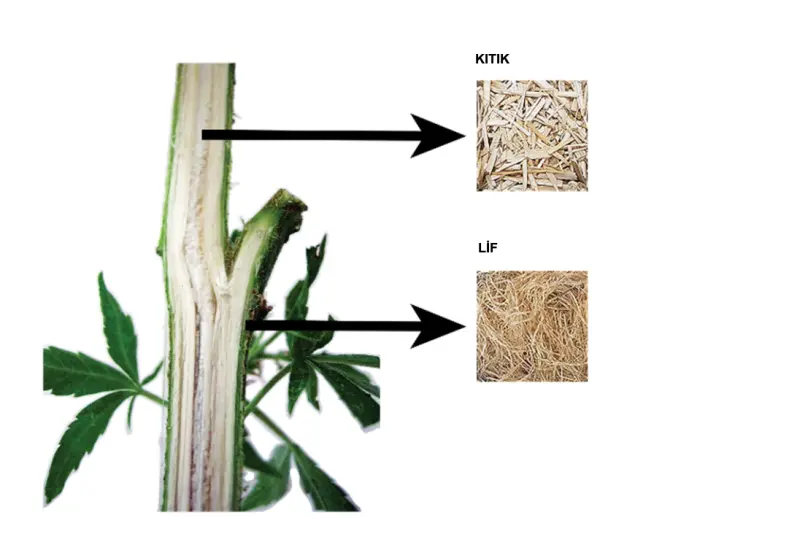
Fragments of rigid plant material — known locally as “kıtık” or “kırtık” — remain attached. These woody pieces resemble bamboo fragments and appear almost like sawdust after the process.
In fact, these fragments make up around 60 percent of the plant’s mass. While unsuitable for textiles, they are highly absorbent and can be repurposed as animal bedding.
Step two: opening the fibers
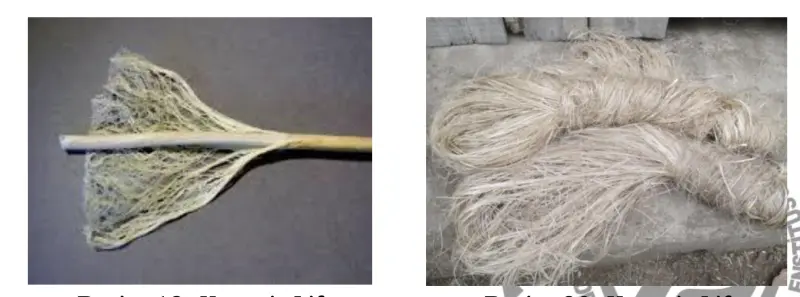
After studying textile production in industrial hubs such as Uşak and Denizli, the ASTAB founders realized the separated fibers needed to be processed further.
To spin yarn, the fibers had to be separated into fine strands — almost like hair — through a process known in Turkish as hallaçlama, or fiber opening. But this required another machine.
They found a scrap opening machine component—a cylinder with needles—and modified it to create their own fiber-opening machine.
Step three: softening the fibers
Even after opening the fibers, another major challenge remained: softening hemp fibers enough for textile use.
Halitcem Karagözler, an engineer at ASTAB and the son of co-founder Aydın Selçuk Karagözler, explains that the process — known as retting — is handled differently in Europe.
“In many European countries farmers leave hemp stalks in water pools or open fields for three or four months so the fibers begin to rot naturally,” he says.
“But in Turkey both land and water are valuable resources. We don’t have that luxury.”
Hemp fibers contain cellulose, but they are also bound together by lignin and pectin, natural substances that act like adhesives within the plant’s structure. To separate the fibers into usable strands, these compounds must be broken down.
Working with researchers from Ege University, ASTAB developed its own enzyme-based process to remove lignin and pectin.
“I can’t disclose what the enzyme is,” Karagözler says with a smile. “That’s our company secret. But once we solved that problem, the physical separation of the fibers became much easier.”
Step four: carding
After the opening process, the fibers still require another stage: carding.
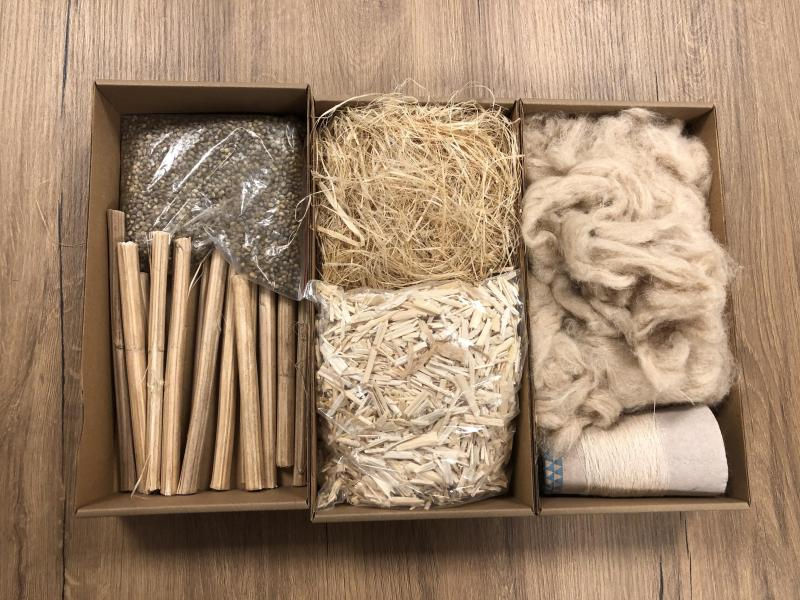
ASTAB developed an additional machine for this step, which smooths and fully separates the fibers. Only after carding do they become fine enough to resemble cotton.
The result is the company’s signature material: tülbent, a soft, cotton-like hemp fiber.
This fiber is then sent to spinning mills, where it is typically blended with cotton to produce yarn.
Textile manufacturers determine the ratio of hemp to cotton themselves. Some prefer 55 percent hemp and 45 percent cotton, while others experiment with higher hemp content.
The long-term goal, Karagözler says, is to produce textiles with the highest possible proportion of hemp — something that will require further advances in fiber softening
The biggest barrier: no market
According to Halitcem Karagözler, both cultivation and fiber processing are technically possible — but there is not yet a stable market.
“As a farmer, you grow something in order to sell it,” he says. “If the product cannot be sold, you either burn it or store it. But storing something that cannot remain in the field creates additional costs. If farmers cannot sell their crop, why would they plant it again next year?”
Selling hemp simply as raw stalks is not economically viable.
“If there were an export market, you could produce cheaply and create added value,” he adds. “But countries that consume hemp usually produce it themselves.”
Large companies remain cautious
ASTAB has held meetings with several major textile manufacturers in Turkey, but so far none have made significant investments in hemp production.
Karagözler believes large companies hesitate because they assume a small producer cannot supply the massive volumes they require.
“No one starts a business saying they will produce ten tons per day,” he says. “First you see whether it works. Then you study the market.”
Without state incentives or the involvement of major brands such as Mavi or LC Waikiki, expanding hemp textiles in Turkey will remain difficult.

At the same time, competition from China, which has vast production capacity and low costs, makes the sector even more challenging.
A possible advantage: Europe’s Green Deal
Yet Karagözler believes Turkey may still have an opportunity.
He points to the European Green Deal, announced by the European Union in December 2019 with the aim of making Europe the world’s first climate-neutral continent by 2050.
Under the plan, companies and countries will increasingly be evaluated according to their environmental performance.
“Countries will have environmental scores,” Karagözler says. “The EU may reduce imports from countries with lower scores.”
China, he argues, could face disadvantages due to its high levels of pollution and large carbon footprint.
“There is also discussion of a ‘green tax’ that could balance competition with China,” he adds.
If such policies take effect, Turkey's geographical proximity to Europe and relatively lower carbon footprint could give it a competitive advantage.
A shift that may become inevitable
For Karagözler, the future of hemp may ultimately be shaped by environmental pressures rather than market demand.
“Turkey's water resources are declining,” he says. “Pesticides and fertilizers are becoming increasingly expensive.”
At some point, he argues, the textile industry may have little choice but to turn to alternative crops such as hemp.
“Even under the banner of environmental protection,” he says, “there will eventually be pressure pushing agriculture toward hemp cultivation.”
Hemp: Can be soft as paper or hard as concrete
Selma Oleş ise a marbling artist from the eastern city of Malatya, one of the 11 cities that were hit by deadly earthquake in February 6th, 2023.
Oleş first encountered hemp as a paper for her art. But after a while, even before the earthquake, hemp represented something far more ambitious: a material that could transform the whole construction sector.
Born in Malatya in 1963, she studied law at Istanbul University but left before graduating, saying she had lost faith in the justice system. In 1987 she joined the Turkish foreign ministry and worked for 21 years at Turkey's embassy in Budapest.
After retiring in 2008, she returned to Turkey and began focusing on ebru, the traditional art of paper marbling.
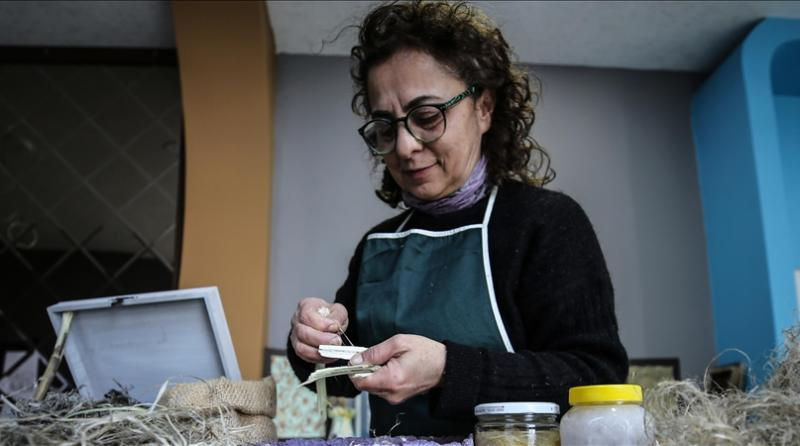
Her work was exhibited in both Europe and Turkey. But the deeper she became involved in the craft, the more a practical question began to bother her.
“Why don’t I produce my own paper?” she recalls asking herself.
Traditional art papers used for marbling, calligraphy and illumination are typically imported from countries such as China, Japan, South Korea and Bangladesh — often at very high prices.
Oleş wondered whether hemp could provide a local alternative.
Reinventing an ancient technique
After researching historical paper-making methods, she decided to grow hemp herself.
Already registered as a farmer, she received permission in 2019 to cultivate hemp on a small section of her land. But once the plants were harvested, she quickly ran into a major obstacle familiar to many small producers in Turkey: separating the fiber from the tough hemp stalk.
“The traditional method is to do it by hand,” she says. “But the industrial machinery for this process doesn’t really exist here.”
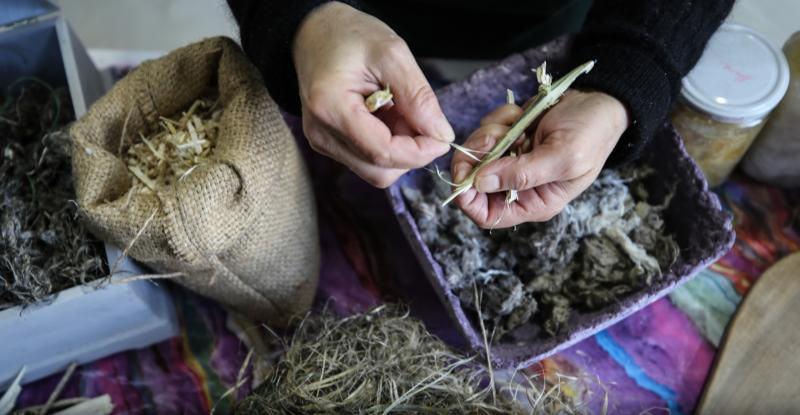
Without access to proper equipment, Oleş resorted to improvised methods. She soaked the hemp, dried it, and softened it by pounding it with a mortar.

Eventually she produced her first sheets of hemp paper in December 2019. “I probably made about a hundred,” she says.
The process was painstaking. Fibers had to be boiled for hours to remove natural resins. Without industrial reactors, she turned to a more familiar household device.
“I cooked them in a pressure cooker for hours, sometimes days,” she says. The experiment was costly. “I easily spent 250,000 to 300,000 lira,” she says.
Eight time stronger than concrete
Oleş first encountered hemp as a building material while working in Hungary, where she spent more than two decades as part of Turkey's diplomatic service. The idea stayed with her for years, but it was only in November 2022 that she found an opportunity to pursue it seriously.
After researching the material, she presented a proposal to academics in the Civil Engineering Department at İnönü University. Her project — using hemp fibers to produce construction blocks — was later approved by the technopark affiliated with the university.
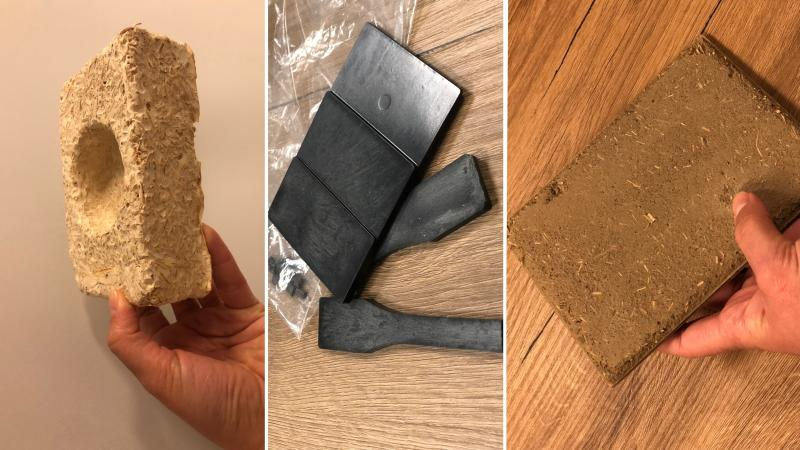
According to Oleş, the basic formula is deceptively simple: hemp fiber combined with lime and water. But she says the material her team developed goes much further.
“We improved the formula,” she explains. “Instead of water, we created a special mixture. In the end we obtained a material that is eight times stronger than concrete, extremely light and almost impossible to crush.”
The result, she says, could have important implications for earthquake-prone countries like Turkey.
“If something made from this material fell on your head, the chance of death would be very low,” she says. “That’s why I believe it should be used in earthquake zones.”
The material can be formed into interlocking blocks, allowing a house to be assembled within hours. Oleş describes the structure as a “breathing house”: a building that absorbs carbon rather than emitting it.
“It’s not carbon-neutral,” she says. “It’s carbon-negative. It can even absorb cigarette smoke inside the house.”
The material is also resistant to insects and can withstand fire for up to two hours, she adds.
A test interrupted by disaster
The first durability test of the material was carried out in early 2023 — just one month before the devastating February 6 earthquakes in southern Turkey.
According to Oleş, the test results suggested the material was far stronger than conventional concrete.
A second test had been scheduled for February 6. Instead, the earthquakes struck that morning, killing more than 50,000 people and devastating large parts of southeastern Turkey.
The disaster forced Oleş to leave Malatya. The academics she had been working with were deployed to the earthquake zone, and the patent application for the material was postponed indefinitely. Afterward, she relocated to the Black Sea city of Samsun.
Big ideas, little support
In the begining, Oleş hoped that hemp paper could eventually be produced locally at a fraction of the price of imported art papers — perhaps even one-fifth of the cost. But turning that vision into a functioning industry has proved difficult.
Despite presenting her ideas at conferences and public meetings, she says meaningful support has been scarce.
“Many people like the idea,” she says. “But no one says: ‘Let’s help you make it happen.’”
The experience has left her frustrated — particularly in a country that has recently witnessed the catastrophic consequences of weak construction standards.
“Skyscrapers collapsed in the earthquake,” she says. “New buildings collapsed. Million-dollar homes collapsed.”
“So why is it so difficult,” she asks, “for me to build a hemp house in my own garden?”
Hemp’s Most “Delicious” Form: The Seed
From the T-shirt on your back to the walls of the house you sit in, hemp can find its way into countless products. But how does the plant become food?
To answer that question, we turn to another producer working in the field.
Burcu Filibeli, the founder of Yelbis Phytochemistry Agriculture, is a chemist, livestock farmer and agricultural producer. Born in İzmir in 1974, she graduated from the Chemistry Department of Middle East Technical University and spent years working across the food industry — from wine production to frozen fruit and vegetables.
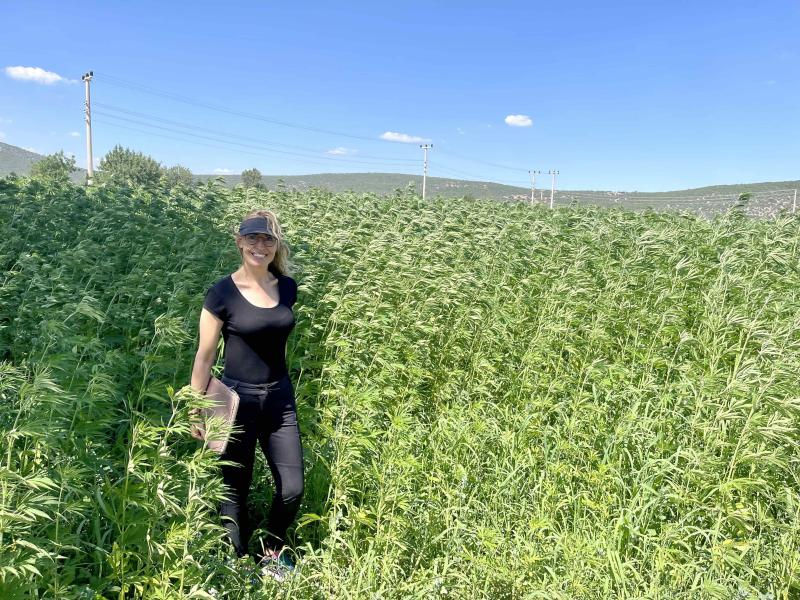
Over the past three years, however, Filibeli has shifted her focus toward medicinal plants. Today she cultivates hemp on roughly 15 decares (about 1.5 hectares) of land.
Her decision to move into medicinal crops, she says, is closely tied to the rapid transformation of the world.
“We are evolving into a very different world — a much hotter and much more intelligent one,” Filibeli says. “Food is changing just as quickly. More than half the products on supermarket shelves today didn’t even exist 150 years ago.”
That transformation, she believes, is only beginning.
“Climate zones will shift. Crops will change. People’s eating habits will change,” she says. “And the active compounds found in plants will play a much bigger role in medicine.”
Hemp hearts, hemp protein and hemp flour
Filibeli’s interest in hemp does not lie in the stalk but in the seed.
To harvest seeds, hemp plants must be left to grow until they flower. The seeds are then used as the base for a range of food products.
Because the company is still relatively small and undergoing an extensive research and development process, none of the products have yet reached the market. But the list of items under development is long: hemp seed oil, hemp hearts (the shelled inner seed), hemp protein, hemp fibre for use in soups and bread, and hemp flour. The next step, Filibeli says, will be hemp milk.
Each product is designed for a specific dietary need.

“For example, if someone wants fibre only for digestive health, we recommend hemp fibre,” she explains. “A hundred grams of hemp contains more than seventy grams of fibre and has a very high iron content.”
“For athletes, on the other hand, the focus may be protein. If you want to lose weight and avoid fat intake, you can consume pure hemp protein with the fibre and oil removed.”
Seeds harvested by hand
Filibeli notes an important distinction: hemp oil — extracted from the plant’s flower and currently illegal to process in Turkey — is different from hemp seed oil, which is made from the seeds themselves.
Hemp seed oil is rich in omega-3 fatty acids and B vitamins. But its chemical structure breaks down under heat, meaning it should be consumed cold — for example in salads — rather than used for cooking.
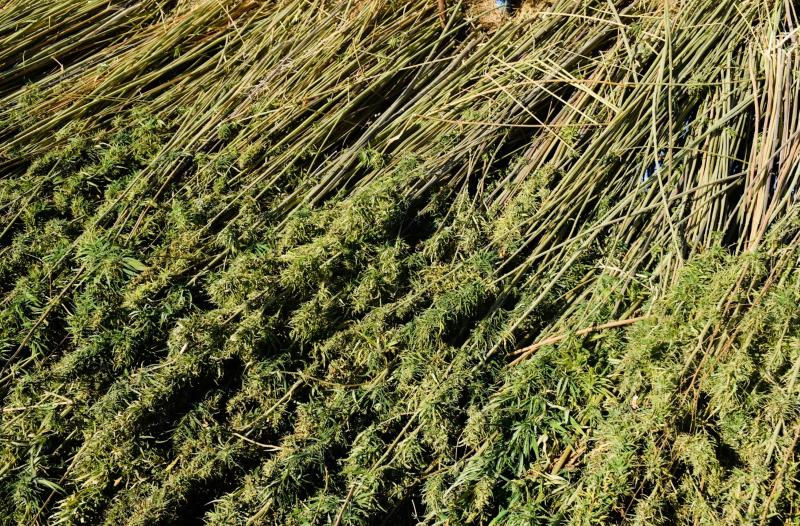
After harvest, hemp plants are spread across empty land to dry, a process that takes around ten days. The next step is manual threshing. As the dried flowers are beaten, seeds fall out naturally.
Once the seeds are collected, the remaining dry stalks are sent for textile production. Filibeli says that fibre taken from seed-bearing plants is not of the highest quality.
“By that stage the plant has aged and dried out,” she explains. “But even that fibre can still be used for products such as carpets, rugs or sacks.”

Misleading claims in the market
When asked about the growing number of hemp products sold online, Filibeli warns that misinformation is widespread.
“Many of the products you see on the internet simply don’t deliver what they claim,” she says.
Hemp is the only plant known to naturally produce cannabidiol (CBD), but the compound is found in the flower, not in the seed.
“I often see advertisements online claiming ‘CBD hemp seeds’. That’s simply not true,” Filibeli says. “Seeds do not contain CBD.”
She adds that medicinal plants are particularly vulnerable to misinformation before reaching consumers.
“When you look at the price of hemp seed oil on the market, you might see one bottle selling for 800 lira and another for 3,500. Do you really think they contain the same thing? That’s impossible.”

Some hemp seeds are imported from China, she says, but those seeds cannot legally be planted in Turkey. To prevent germination during storage, they are heat-treated — a process that also alters their chemical composition.
“Pressing oil from those seeds is like roasting walnuts or cooking olives before extracting their oil,” Filibeli says. “All the beneficial molecules are transformed.”
“In the end you still get oil — but from what raw material? From which seed? Was it local or imported? These questions matter.”
“Our hemp field was raided repeatedly”
Security is another challenge faced by Yelbis Phytochemistry.
Filibeli says their first planting took place on a six-decare plot surrounded by fences and cameras. Even so, the field was raided at least ten times, and one worker was injured.
“If you ask me the biggest challenge in hemp farming, the number one problem is security,” she says.
Many people still believe industrial hemp produces a narcotic effect, despite the fact that it does not. According to the gendarmerie, some illegal cannabis dealers even mix industrial hemp with other substances to increase the weight of their product.
Mechanisation is another obstacle.
Hemp cultivation areas in Turkey are still small, meaning farmers cannot justify the cost of harvesting machinery. And existing machines are mostly designed for fibre producers.
“For seed producers like us, those machines don’t work,” Filibeli explains. “When they cut the stalks, the seeds scatter everywhere or get crushed.”

“This is not an economic problem — it’s a moral one”
Filibeli believes hemp’s use in food and textiles is still in its infancy in Turkey.
While the government provides incentives for medicinal and aromatic plants such as thyme and bay leaves, she says similar support does not exist for hemp. Fertiliser and diesel subsidies are also insufficient.
Yet the issue, she argues, goes beyond economics.
“Among all the traumas humanity has experienced — from nuclear disasters to the depletion of natural resources — one of the greatest has been caused by agriculture itself,” she says.
The real challenge, she argues, is sustainability.
“There are things we are stealing from future generations to satisfy needs that aren’t even real needs today,” she says, pointing to industrial livestock farming as an example.
“The global population doubles, but meat production quadruples. To feed all those animals we would need grazing land the size of South America. We simply don’t need that much food.”
Hemp, she notes, has clear environmental advantages: it produces no waste, requires little water, rarely suffers from disease, absorbs heavy metals from soil and generates more oxygen than trees.
But sustainability must also be considered in how the crop is grown.
“If hemp is produced in completely artificial, soil-free systems under electric lighting, and that requires enormous amounts of energy, then claiming hemp is ‘healthy’ loses its meaning,” she says.
Agriculture, she argues, should not only consider the final product but also the environmental damage created during production. “Crop planning should be a necessity,” Filibeli says.
“Every producer now has to think honestly about resource optimisation, chemicals and responsible agriculture. They may have to sacrifice a bit of yield in order to take responsibility for quality and sustainability.”
“Because in the end,” she adds, “this is not an economic problem. It’s a moral one.”
(This article was first published in Independent Turkish on January 5, 2024)


Yorumlar