From shipbreaking to old buildings: what is asbestos and why is it dangerous?
A planned shipbreaking operation in western Turkey has reignited debate over asbestos—an industrial material once widely used but now known to cause deadly diseases.

A decommissioned aircraft carrier built during the Cold War has become the centre of a heated environmental debate in Turkey.
The ship, known as NAe São Paulo aircraft carrier, was constructed in France in the late 1950s and launched in 1963. Nearly four decades later it was sold to the navy of Brazil for about $30m, during the presidency of Fernando Henrique Cardoso, who described the purchase as part of a military modernisation programme.
Now retired after more than six decades of service, the vessel is once again making headlines—this time because it is expected to be dismantled in the shipbreaking yards of Aliağa, İzmir.
Environmental groups say the ship may contain significant quantities of asbestos, a toxic material long used in industrial construction.
Estimates vary widely. Some reports suggest more than 900 tonnes of asbestos could be on board, while other official statements put the figure closer to 9.6 tonnes.
For comparison, the ship’s sister vessel French aircraft carrier Clemenceau reportedly contained 760 tonnes of asbestos when it was dismantled.
What is asbestos?
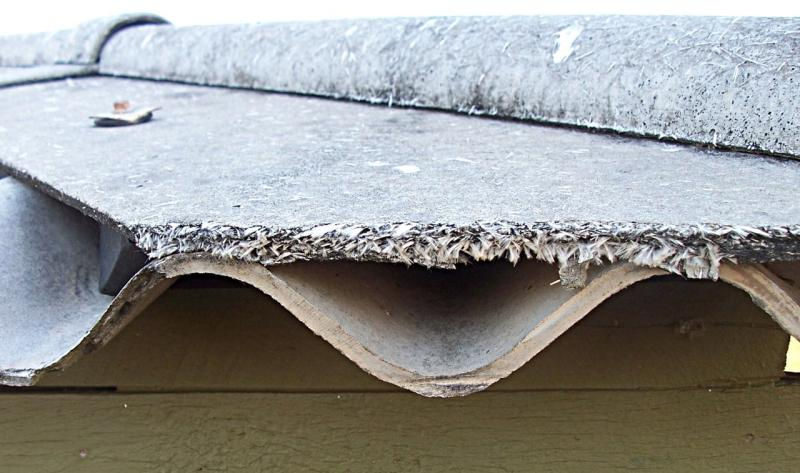
Asbestos—also known commercially as amyant—is a naturally occurring mineral composed of microscopic fibres.
Because it is heat-resistant, flexible and highly durable, it was widely used for decades across multiple industries, from textiles and cement production to construction and shipbuilding.

According to information published by the Ministry of Labour and Social Security of Turkey, asbestos becomes dangerous when its fibres are released into the air and inhaled.
Once airborne, these fibres can enter the lungs and remain there for years, causing serious illnesses.
The Turkish Thoracic Society says exposure to asbestos can lead to diseases such as asbestosis, fluid accumulation in the lining of the lungs, lung cancer and mesothelioma, a rare but aggressive cancer affecting the membranes surrounding the lungs and abdominal organs.
Hidden in many industrial structures
Although Turkey banned the production and use of asbestos in 2010, the material still exists in many older structures and industrial products.
It can be found in aging buildings, insulation materials, brake pads, pipelines and ship components, among other places.
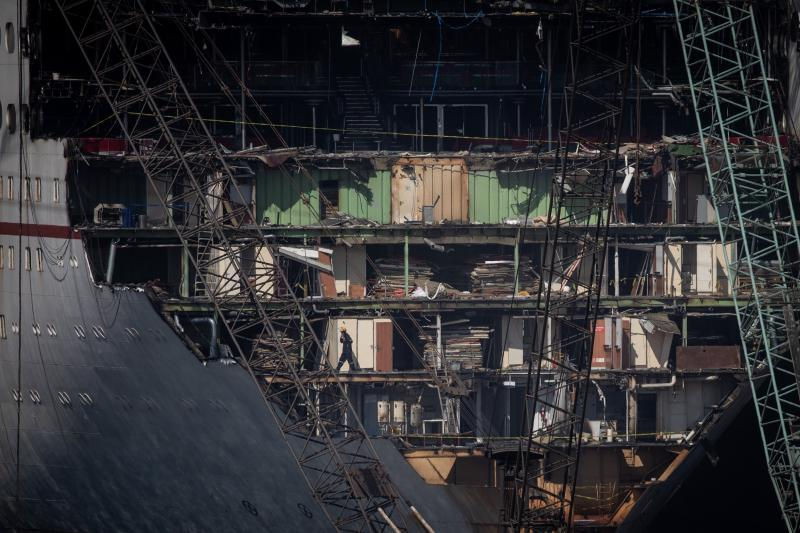
Shipbreaking operations are considered one of the highest-risk sectors for asbestos exposure.
The primary purpose of dismantling old ships is recycling valuable metals and materials. But during the process—particularly in maintenance and repair operations—hazardous substances such as asbestos can be released.
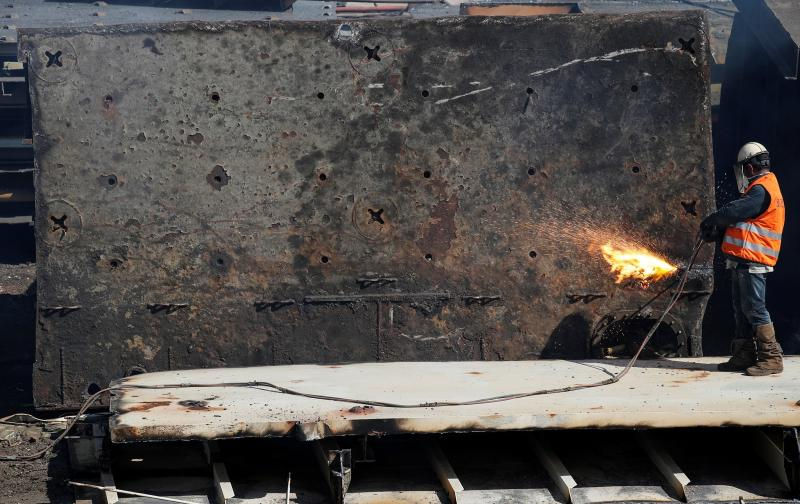
If safety procedures are not followed properly, the fibres can pose health risks not only to workers but also to nearby communities.
According to a 2017 report by the Turkish Thoracic Society, asbestos can be found throughout a vessel’s structure, including:
· engine and generator exhaust systems
· fuel, oil and heat-transfer pipes
· turbines and boilers
· ventilation and heating systems
· ceilings and corridors in living quarters
· cable passages and pipe seals
· tank cleaning systems and deck equipment
In other words, asbestos in ships is not a transported cargo but a material embedded in the ship’s structure itself, particularly in areas requiring insulation.
Conditional approval for dismantling
News that the NAe São Paulo would be brought to Turkey for dismantling first surfaced in July 2022.
According to reports, the ship was authorised for dismantling by the Ministry of Environment, Urbanization and Climate Change of Turkey, which granted a permit to a Turkish shipbreaking company in May that year.
The approval was conditional. The ministry said the transport must comply with the Basel Convention, the international agreement governing the cross-border movement of hazardous waste.
Authorities also required confirmation that the vessel had been cleared of radioactive materials and that radiation levels remained below background thresholds.
Officials said radiation measurements would be conducted again before the ship was allowed to dock in Turkey, and the costs of those inspections would be covered by the dismantling company.
“If the measurements reveal radiation levels inconsistent with the declaration, the ship will be returned to the exporting country,” the ministry said.
Political and local backlash
The project has drawn strong criticism from environmental organisations and local officials.
Murat Kurum, the environment minister at the time, said the government was closely monitoring the process and would not allow any operation that could threaten public health or harm the environment.
He also emphasised that asbestos-containing waste from shipbreaking operations is sealed in special packaging, transported by licensed vehicles and disposed of in regulated storage facilities.
But critics say those assurances are not enough.
Tunç Soyer, mayor of İzmir (between 2019-2024), has vowed to challenge the decision in court.
“İzmir is nobody’s dumping ground,” Soyer said at a press conference organised with the İzmir Medical Chamber.
He also questioned the reliability of the ship’s hazardous materials inventory.
“They say we can visit the ship so everyone can see it,” he said. “But the company that prepared the hazardous waste inventory says there are areas that cannot even be accessed. What exactly would we be seeing?”
Soyer also noted that the vessel had reportedly been rejected by shipbreaking yards in India before being sent to Turkey.
“If another country refused to accept this ship, why are we taking it?” he asked.
Shipbreaking company rejects claims of massive asbestos
The Turkish company Sök Denizcilik set to dismantle the retired aircraft carrier NAe São Paulo says reports suggesting the vessel contains hundreds of tonnes of asbestos are “unfounded,” amid growing public concern over the ship’s planned dismantling in İzmir.

The company contracted to dismantle the retired aircraft carrier NAe São Paulo aircraft carrier has rejected claims that the vessel contains extremely large quantities of asbestos.
In a written statement, Turkish shipbreaking firm Sök Denizcilik said reports suggesting the ship holds around 900 tonnes of asbestos do not reflect reality.
The company won the shipbreaking tender on 12 April 2021 and said extensive inspections were carried out in the months that followed.
According to the statement, technical assessments and documentation continued for eight months after the tender was awarded.
“Before receiving the final analysis and report results, our company made no official application regarding the transportation of the São Paulo vessel to our country,” the firm said.
The company added that its formal application under the Basel Convention—which regulates the cross-border movement of hazardous waste—was only submitted on 21 December 2021.
That application, it said, came after the company had received two key documents: the Inventory of Hazardous Materials (IHM) report and radiation measurement results for the ship. Both documents were required before the dismantling process could proceed, the company noted.
The danger beyond the ship
Experts say the debate goes far beyond a single vessel — touching on broader concerns about worker safety, environmental risk and the economics of the global shipbreaking industry.
Speaking to Independent Turkish, naval engineer Bülent Hüseyinoğlu, a board member of the Chamber of Naval Architects and Marine Engineers (TMMOB), said ship dismantling carries two major dimensions: public health and economic impact.

According to Hüseyinoğlu, asbestos was widely used as an insulation material in ships built before 2000, meaning the mineral is still present in many aging vessels awaiting dismantling.
He drew a parallel with urban renewal projects in Istanbul, where older buildings were demolished without widespread public debate over potential asbestos exposure.
“Many of the old buildings in Fikirtepe contained asbestos,” he said. “When they were demolished, the dust spread across Istanbul and nobody really addressed it. We also know that about 700 tonnes of asbestos were found at a demolished power plant in Avcılar — yet it barely entered the public conversation.”
Strict regulations — but enforcement questioned
Shipbreaking is governed by a strict regulatory framework, Hüseyinoğlu said, warning that violations could lead to heavy fines or even the closure of a facility.
“If such operations are carried out illegally on a vessel, it could result in the entire yard being shut down and penalties reaching hundreds of thousands of dollars,” he said.
Yet he stressed that before focusing solely on regulatory compliance, the industry must also address the working conditions of shipbreaking labourers, who often work in physically demanding and hazardous environments.
Facilities should provide basic infrastructure such as canteens, changing rooms and improved safety measures, while tools and equipment should be modernised to reduce risks, he said.
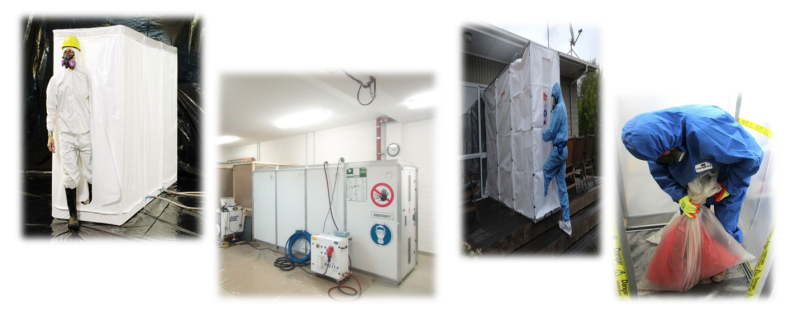
Workers involved in asbestos removal must wear special protective suits, masks, shoes and goggles, with certain equipment — including disposable coveralls and filtered masks — replaced daily.
How asbestos is removed from ships
Before asbestos removal begins, the area where the material will be extracted must be completely sealed off, Hüseyinoğlu explained.
If scraping or dismantling is required, the space is isolated from the surrounding air to prevent asbestos fibres from spreading beyond the worksite — particularly to nearby communities such as Aliağa, one of the country’s main shipbreaking hubs.
With more than 30 years of experience in shipbuilding engineering, Hüseyinoğlu said specialised vacuum compressors — essentially industrial vacuum systems — are used to capture airborne dust during the operation.
The work area is also sprayed with special solutions that keep surfaces damp, preventing hazardous fibres from becoming airborne.
Government inspections are conducted periodically, he added, but concerns remain about whether existing oversight mechanisms are sufficient — especially if large quantities of asbestos are involved.
“Turkey has the technical personnel capable of carrying out ship dismantling,” he said. “But if the asbestos quantity is extremely large, it raises questions about whether the available workforce will be enough.”
Another unresolved issue is how frequently and by whom the inspections are carried out, he noted.
Disposal rules and environmental concerns
After a ship is dismantled, most materials are sent for recycling. Hüseyinoğlu emphasised that the recycling sector plays a significant economic role.
Producing one tonne of steel from scrap generates far less carbon emissions and consumes far less energy than producing steel from iron ore, he said — making ship recycling environmentally beneficial when carried out properly.
However, asbestos waste must be handled under strict provisions of Turkey’s Waste Management Regulation.
Materials containing asbestos or asbestos dust must be sealed in leak-proof packaging, transported separately from other waste and removed from the workplace as quickly as possible.
Transport must be carried out by licensed hazardous waste carriers authorised by the Ministry of Environment, and the material must then be delivered to certified disposal facilities.
According to the Chamber of Environmental Engineers (Turkey), asbestos should ultimately be buried in first-class regulated landfill sites, reflecting the fact that the mineral naturally occurs in soil but becomes dangerous when airborne.
The Chamber of Chemical Engineers (Turkey) warns that asbestos must never be dumped in excavation sites, landfills, rivers or waterways — nor can it be incinerated.
Licensed disposal facilities currently operate in several Turkish provinces, including Kocaeli, Istanbul, Manisa and Tekirdağ.
Why warships are attractive for recycling
Warships are often particularly attractive to the recycling industry, Hüseyinoğlu said, because they contain higher-quality scrap metals.
“They often include more valuable materials,” he explained, noting that specialised steel and copper components used in military vessels increase their recycling value.
But debate continues among professional associations and the public over whether asbestos removal from ships can be conducted fully in line with regulations — and whether oversight mechanisms are robust enough.
“If our people are going to develop cancer as a result,” Hüseyinoğlu said, “then any profit from this process is not worth it.”
The high cost of asbestos removal
Removing asbestos from ships is extremely expensive, he added.
According to Hüseyinoğlu, even dismantling 30 to 40 tonnes of asbestos from a vessel can cost hundreds of thousands of dollars once labour, specialised equipment and disposal fees are factored in.
Protective clothing, filtration masks and the chemicals used to suppress dust all add to the expense.

Certification bodies also play a role in monitoring industry standards. Eight ship recycling companies in Turkey have been assessed as compliant with European Union standards under the supervision of DNV (Det Norske Veritas), a Norwegian classification society and member of the International Association of Classification Societies.
Millions of dollars if asbestos quantities are high
If the aircraft carrier arriving from Brazil contains hundreds of tonnes of asbestos, the cost of dismantling and disposing of it could reach millions of dollars, Hüseyinoğlu said.
He raised several unanswered questions: how much the dismantling contract was worth, how much it will cost to transport the vessel, and whether the value of the recycled materials will cover those expenses.
Scrap steel currently sells for around $350–$400 per tonne, he said — raising doubts about whether recycling profits would offset the potentially massive costs of safe asbestos removal.
Still, Hüseyinoğlu stressed that asbestos-containing ships are dismantled around the world, and that the issue should not be framed as an absolute ban.
“Saying ‘asbestos ships should never come here’ is not the right approach,” he said. “Such ships have been dismantled for years. What matters is whether the work is carried out strictly in line with regulations and with sufficient resources.”
For projects of this scale, he added, professional oversight from organisations such as the naval architects’ and environmental engineers’ chambers is essential.
A major hub for global ship recycling
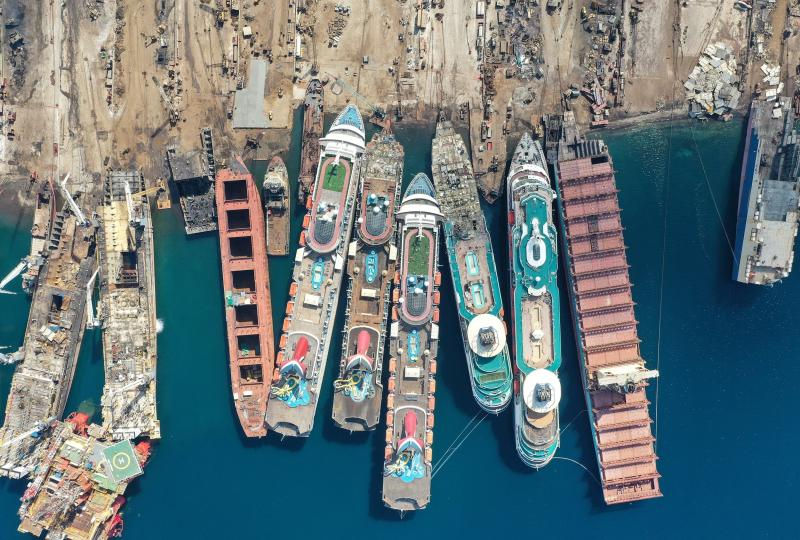
Turkey has become one of the world’s leading ship-recycling nations, with its industry dating back nearly half a century.
The country’s first ship recycling facilities were established in 1976 by a decision of the Council of Ministers, with the coastal district of Aliağa emerging as the sector’s main hub. Today, shipbreaking operations are also carried out in Tuzla and Yalova.
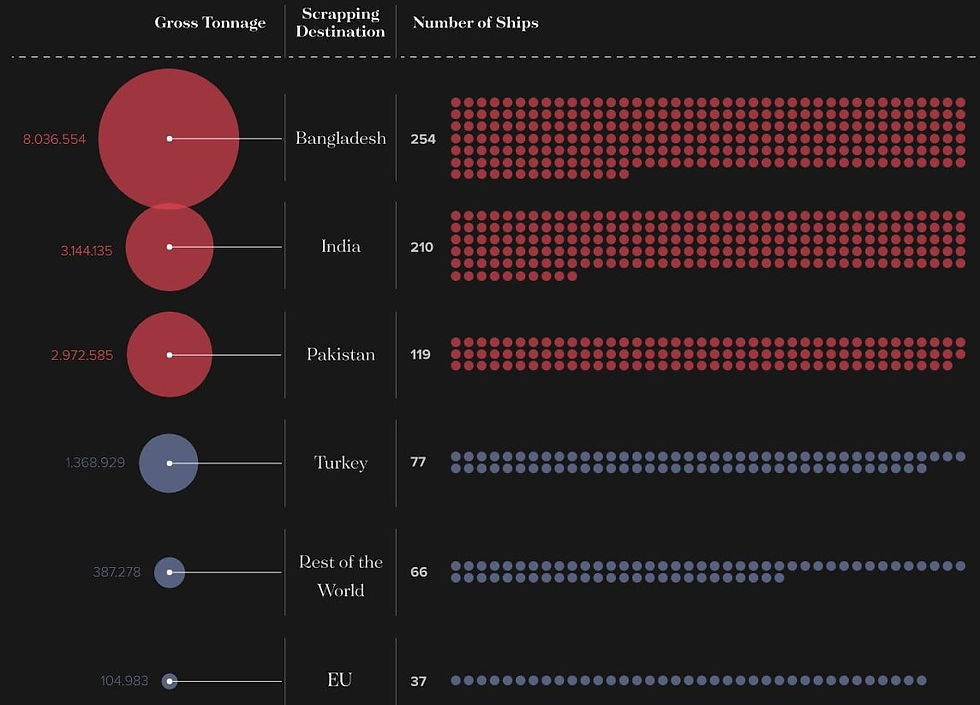
Between 1994 and 2002, around 2.8% of the world’s ship recycling by vessel count and 1.1% by tonnage took place in Aliağa.
By 2016, that share had risen to about 4%, according to an article published by the European Commission, placing Turkey among the five largest ship-recycling countries globally.
Turkey’s steel industry also benefits from the sector. The country — described by the European Commission as the world’s 10th-largest steel producer — sources roughly 1–2% of its raw material from ship recycling.
Data from the NGO Shipbreaking Platform shows that in 2021 the world’s largest ship-recycling countries were Bangladesh, India and Pakistan, with Turkey ranking fourth.
Regulation tightened after early criticism
Environmental and labour concerns have long surrounded the industry.
In 2002, environmental group Greenpeace published a report describing unsafe working conditions and environmental risks in Turkish ship-recycling facilities. The report said workers lacked sufficient protection and that measures to prevent environmental contamination were inadequate.
According to the NGO Shipbreaking Platform, the report prompted Turkish authorities to introduce new measures to manage hazardous waste and improve occupational health conditions.
Ship recycling yards in Aliağa subsequently opened their doors to independent researchers, experts and consultants, the group said.
However, concerns remain.
Civil society organisations, labour rights groups and the Health and Safety Labour Watch (İSİG) say there is still limited transparency regarding employment conditions, accident rates, toxic waste management, unionisation and occupational disease statistics in the sector.

International conventions and legal framework
Concerns about workplace accidents and environmental damage in the global ship-recycling industry have led to several international legal frameworks.
The most significant is the Basel Convention, adopted in 1989 and entering into force in 1992, which regulates the cross-border movement and disposal of hazardous waste.
Another major framework is the Hong Kong International Convention for the Safe and Environmentally Sound Recycling of Ships, adopted in 2009 but not yet in force.
Turkey was the first country to sign the Hong Kong Convention, doing so on 26 August 2010.
Meanwhile, the Basel Convention — now ratified by 178 countries — aims to protect human health and the environment from harmful effects associated with hazardous waste generation, management and transboundary movement. Turkey became a party to the convention in 1994.
International warning over São Paulo export
The debate intensified in July 2022 when international environmental organisations raised concerns about the planned dismantling of the aircraft carrier NAe São Paulo aircraft carrier in Turkey.
On 19 July 2022, Ingvild Jenssen, executive director of the NGO Shipbreaking Platform, and Jim Puckett, executive director of the Basel Action Network, sent a letter to Brazilian Institute of Environment and Renewable Natural Resources (IBAMA).
In the letter, the organisations said they had reviewed documentation related to the ship’s planned export from Brazil to Turkey for recycling.
“Some of the documents we examined were enough to set alarm bells ringing,” the letter said.
“Our preliminary analysis has convinced us that the export of the São Paulo to Turkey is most likely illegal, and that approving it would represent a failure to comply with the Basel Convention.”
A ship with a controversial twin
The groups also highlighted the ship’s history.
The São Paulo is the sister vessel of the French aircraft carrier Clemenceau aircraft carrier, which served between 1961 and 1997 and became notorious for the large amount of asbestos found aboard.

Before Clemenceau was dismantled in the United Kingdom in 2009, the vessel was inspected in 2006 by maritime expert Aage Bjorn Andersen.
According to Andersen — who was involved in the development of guidelines by organisations such as the International Labour Organization and the International Maritime Organization — the ship contained around 760 metric tonnes of asbestos.
Based on that assessment, he believed the actual asbestos content aboard São Paulo could be between 500 and 1,000 tonnes, the letter stated.
Questions over radiation inspection
The NGOs also questioned how the vessel had been inspected for radioactive materials.
According to the hazardous materials inventory report, smoke and heat detectors were visually inspected and no radioactive substances were found.
But the experts expressed surprise that a warship — which may have had uranium-shielded components or could have been exposed to nuclear fallout during atmospheric weapons tests in the Pacific — was assessed only through visual checks.
“Radiation testing devices such as Geiger counters are not expensive,” the letter said. “Why were these tests not carried out?”
The groups argued that even if Turkish authorities expressed willingness to accept the ship, this would not automatically make the export legal under the Basel Convention, which places primary legal responsibility on the exporting country.
“Much of the problem,” they wrote, “appears to stem from incomplete information about Turkey’s own national and local situation. But under the Basel Convention, the legal obligations fall first and foremost on the exporting state.”
Environmental engineers question past inspections
Turkey’s Chamber of Environmental Engineers (Turkey) says it has been monitoring the planned dismantling of the aircraft carrier NAe São Paulo aircraft carrier since 2021 and is prepared to pursue legal action to prevent the ship from entering Turkish waters.
In its latest statement, the organisation said it would “stand behind every effort to prevent the vessel from entering our seas and will pursue all legal avenues in this direction.”
But concerns over oversight go beyond the current case.
According to Helil İnay Kınay, head of the chamber’s İzmir branch, past shipbreaking projects in the region revealed serious shortcomings in inspection procedures.

In an interview with Anka News Agency in May 2021, Kınay pointed to earlier dismantling operations involving the vessels Kuito and Ethane, which were scrapped in Aliağa in 2015 and 2016 despite court challenges and temporary suspension orders.
“In the Kuito case — a ship brought from Angola — authorities said the necessary inspections had been carried out,” she said. “But the results later showed that the inspections were incomplete and the reports were inadequate and misleading.”
By the time legal challenges resulted in a suspension order, the vessel had already been dismantled.
What alarmed the organisation most, Kınay said, was the way the inspection had been conducted.
“We saw that a ship roughly the size of three football fields had been inspected in about 30 to 40 minutes, simply by circling it in a boat,” she said. “These inconsistencies and gaps show the risks involved and the kind of outcomes we may face.”
“Not just Aliağa’s problem”
Shipbreaking in Aliağa has long been controversial.
Kınay described the sector’s history as “dark” and warned that environmental consequences extend far beyond the district itself.
“Aliağa today is not only the problem of those living here,” she said, referencing the ship’s sister vessel Clemenceau aircraft carrier, which became infamous for the asbestos it carried.
“Pollution generated here ultimately affects the entire city of İzmir and the quality of life across the country.”
From fishing village to industrial hub
Half a century ago, Aliağa was a small fishing town.
In 1960, the district had a population of about 3,000 people. With the establishment of iron and steel plants, petrochemical facilities and refineries, it has since transformed into a major industrial centre with more than 100,000 residents.
Today the region hosts nearly 2,900 industrial facilities, according to a 2019 report titled Air Pollution and Health Effects: The Black Report by the Right to Clean Air Platform — a coalition that includes the Turkish Medical Association.

Among them are 22 shipbreaking yards, coal-fired power plants, scrap-metal processing steel mills, rolling mills and petrochemical complexes.
The platform says pollutants released from these facilities — carried by prevailing winds toward İzmir — account for around 80% of the city’s air pollution.
Local environmental group Aliağa Environment Platform (ALÇEP) says cancer rates in the district are four times higher than the national average.
Research presented by Ahmet Soysal of Dokuz Eylül University found that residents who had lived in Aliağa for 15 to 30 years were 4.7 times more likely to die from cancer than those who had lived there for less than 15 years.
Health risks linked to asbestos exposure
Health experts warn that asbestos exposure remains a serious risk, particularly during shipbreaking operations and urban demolition projects.
According to Oya İtil, president of the Turkish Thoracic Society, asbestos exposure most commonly occurs during ship dismantling and the demolition of very old buildings during urban redevelopment.
Turkey banned the use of asbestos in 2010, but İtil says enforcement has often been weak.
She argues that shipbreaking operations in Aliağa should ultimately be phased out altogether.
“If someone experiences heavy asbestos exposure, the risk of lung cancer increases fivefold,” she said. “If that person also smokes, the risk may increase 20 to 50 times.”
Even inhaling a single asbestos fibre, she warned, can lead decades later to mesothelioma, a cancer affecting the lining of the lungs.
Other cancers linked to asbestos exposure include those of the abdominal lining, heart lining, ovaries and larynx. Lead and other toxic materials present on ships can also contribute to blood and lymph cancers in children.
Workers dismantling ships must wear specialised protective clothing, she said. Yet in some cases those garments are taken home for washing, exposing family members to risk.
“There have been cancer cases among workers’ spouses because contaminated clothing was brought home,” İtil said.
Long-term legacy of asbestos
In a 2017 report titled Health Effects of Asbestos, the Turkish Thoracic Society noted that the dismantling of older ships is often carried out in countries with weaker economic resources.
The organisation estimates that around 500,000 tonnes of asbestos were used in Turkey over the past three decades.
As a result, contact with asbestos-containing materials may continue for another 30 to 40 years, the report warned.
This article, written in 2022, was updated in March 2026.
The Brazilian ship NAE Sao Paulo, which Turkey refused to dismantle due to strong protests from environmentalists, was sunk in the Atlantic Ocean.
The Brazilian Navy announced that it was sunk in a "planned and controlled" manner, 350 kilometers offshore and at a depth of approximately 5,000 meters.
The sinking of the ship, which contained tons of asbestos, heavy metals, and toxic substances, was protested by environmental organizations.
So the controversy surrounding the NAe São Paulo highlights a broader global issue.
As thousands of aging ships, buildings and industrial facilities reach the end of their life cycles, governments and industries must confront the legacy of asbestos.
How those structures are dismantled—and where—has become an increasingly contentious environmental and public health question and how to manage the toxic legacy of past industrial practices.
(This article was first published in Independent Turkish on July 28, 2022)


Yorumlar