There is a word for losing sleep over bad news and it was once the “Word of the Year”
Doomscrolling — the compulsive act of consuming an endless feed of catastrophic news — was named one of Oxford Dictionary's words of 2020. Psychologists say the more anxious we become, the more we seek out news that confirms our fears. Breaking the cycle may be harder than it sounds.

For a few weeks at the start of the pandemic, working from home felt almost like a gift. The daily commute disappeared. Offices emptied.
People who had spent years trapped in a nine-to-five routine suddenly found themselves with something that resembled, however briefly, the kind of flexibility usually reserved for wealthier countries with shorter working weeks.
Then came the rest of it: rising and falling case numbers, economies opening and closing, incomes shrinking, wildfires, floods, street protests. And, for millions of people, a new compulsion — the inability to stop scrolling.
The word for it is doomscrolling. Doom, meaning apocalypse or ruin; scroll, the gesture of dragging your thumb down a screen in search of the next piece of news.
Oxford Dictionary, which selects its words of the year annually, included doomscrolling in its report on the defining vocabulary of 2020 — a year it described as "unpredictable." The definition it settled on was the relentless, compulsive consumption of news, much of it catastrophic, to the point of losing sleep.
“We need to justify out anxiety”
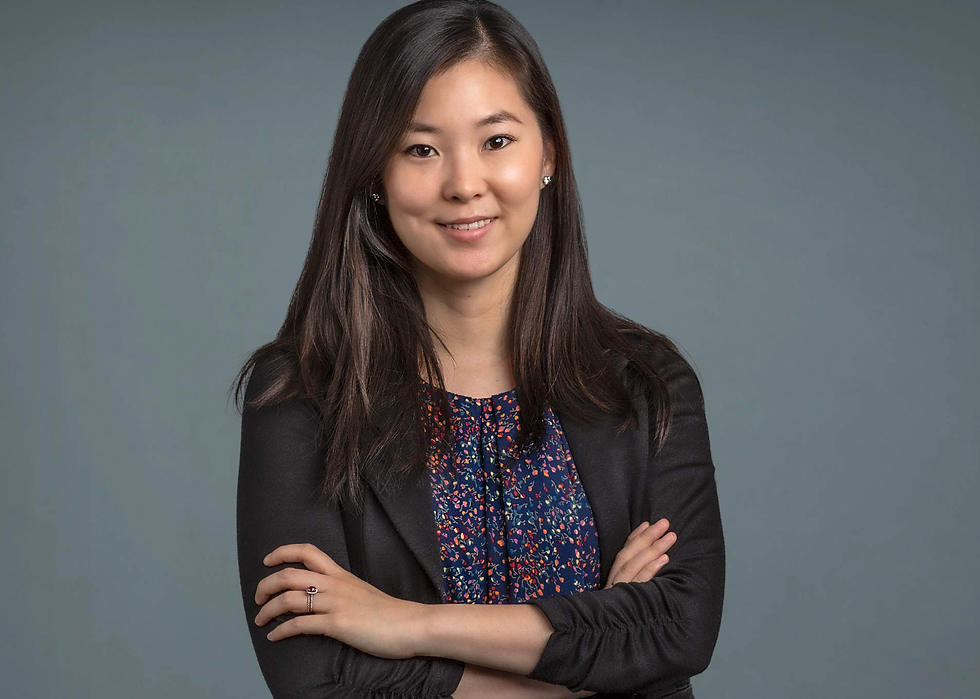
Ariane Ling, a psychologist and faculty member at New York University, describes doomscrolling as "falling down a rabbit hole of bad news and being unable to find the way out." Speaking to Radio Davos, the World Economic Forum's podcast, Ling said the phenomenon has several overlapping causes.

The first is simple, unrelenting curiosity and anxiety about what is happening in the world.
"The sociopolitical climate is very stressful," she said. People are not just consuming news; they are searching for information that validates what they already feel.
"It is almost like a reward system," Ling explained. "If we believe the world is dangerous, we want information that confirms it. We go online to reduce our fears and come out with those fears amplified."
This dynamic, Ling said, pushes people toward hopelessness and isolation. When asked whether anxiety leads to doomscrolling or doomscrolling leads to anxiety, she was candid: "It is difficult to separate which comes first."
“During the pandemic, our only friend was our phone”
There is also a collective dimension to the pandemic's psychological toll that goes beyond individual anxiety.
"Even if we haven't personally lost someone," Ling said, "there is a ripple effect from the losses of others." In the middle of that shared upheaval, the phone became, for many people, their primary source of companionship — and it was designed accordingly.
Jeffrey Hall, a professor of communication at the University of Kansas, told CNN that the mechanics of this are not accidental. "Companies track which sites users visit and what they read, and they learn their viewing habits," he said. "Through specific algorithms, they show users only what will keep them engaged."
“What would you do if you didn't have your phone?”
Ling said that when she works with clients struggling with anxiety-driven pessimism and sleeplessness, she asks them a single question: if you were not using your phone right now, what would you be doing? The answers, she said, are almost always the same: reading a book, looking up a recipe, going for a walk.
"Helping people understand how much time they spend on their phones is the first step," she said.
Her suggestion is not to abandon the news entirely, but to treat it like email — something checked at designated intervals rather than continuously monitored. "You can set yourself a specific window," she said. "Half an hour in the morning, or a fixed period at lunchtime. You do not need to be available to the news all day."
“We are more vulnerable to doom when we are tired”
Evening hours, Ling noted, are when people are most susceptible.
Fatigue lowers the defences. "When your body is saying 'I'm tired, will you please listen to me,' and you are still scrolling, you are sabotaging yourself," she said. Her practical recommendations are straightforward but easy to resist:
* Keep your phone outside the bedroom. Use a screen-time limit if needed.
* If your first impulse on waking — in the middle of the night or first thing in the morning — is to reach for your phone, replace that impulse with a book or a notebook.
* If you are feeling depressed, find a way to write it down rather than scrolling into it.
* Keep a consistent wake time, even at weekends, regardless of how late you went to bed.
* Keep a sleep diary. Sleep-deprived people are far more prone to falling into doomscrolling cycles.
* If you spend most of your day at a screen, build in brief physical breaks — a short walk, a few minutes of stretching — rather than spending the entire day in the same position.
Sleep and rest are not the same thing
Also speaking on that Radio Davos broadcast was Dr. Saundra Dalton-Smith, a physician and author of Sacred Rest. Her argument is that much of modern exhaustion persists even in people who are getting the recommended eight hours of sleep — because sleep and rest, she contends, are not the same thing.

"Most people think rest is just sleep," she told a TED audience in 2019. "But there are actually seven types of rest that the body and mind need." The absence of any one of them, she argues, can leave a person feeling depleted no matter how many hours they spend in bed.
1- Physical rest: Divided into passive — sleeping and napping — and active: yoga, stretching, massage therapy, anything that improves circulation and releases physical tension.
2- Mental rest: "Clearing the brain of information," as Dalton-Smith puts it. People who lack mental rest struggle to concentrate — they go to the supermarket for three things and forget all three. Or they lie in bed and run through tomorrow's to-do list instead of sleeping.
Short breaks every two hours during the working day, combined with writing down intrusive thoughts rather than ruminating on them, can help. "The voice in the mind should quieten," she says.
3- Sensory rest: Relief from the constant bombardment of light, screens, noise and background stimulation. If you have spent the day at a computer and sat through a catastrophic commute home, ending that day without electronic devices is not optional — it is necessary.
4- Creative rest: "Do you remember what it feels like to see an ocean, a waterfall, a beautiful view?" Dalton-Smith asks in her TED talk.
Noticing the birds on a morning run counts as physical, mental and creative rest simultaneously. "You cannot spend 40 hours a week staring at a screen and expect to feel passionate about something, or to generate new ideas," she says. Time spent with art, as well as nature, belongs in this category.
5- Emotional rest: The freedom to express yourself honestly, without performing wellness for others. An emotionally rested person, when asked how they are, can say "not well" without anxiety. They have learned to say no. They do not fear being seen as vulnerable. They share rather than suppress.

6- Social rest: Dalton-Smith argues that emotional and social rest are closely linked: without one, the other suffers. Social rest requires being able to distinguish between relationships that nourish you and those that drain you. "Many of those who draw most negatively on our social energy," she notes, "are the people we love most."
7- Spiritual rest: "A sense of belonging to something you believe is greater than yourself." This can take the form of religious practice, community membership or a daily meditation. Dalton-Smith describes spiritual rest as going beyond the physical and mental to provide a deep sense of purpose, acceptance and love.
The framework Dalton-Smith offers is, in a sense, the structural counterpart to what Ling describes at the level of habit.
Doomscrolling is not simply a bad habit that willpower can break; it fills a void.
The question is which voids — physical, mental, sensory, creative, emotional, social, spiritual — have been left unfilled. The phone is always ready to offer a substitute. The seven types of rest are what it is substituting for.
(This article was first published in Independent Turkish on July 21, 2021)



Yorumlar